Depressed and Anxious at the Same Time? You're Not Confused. You're Typical.
It doesn't feel possible to feel both at once — heavy and slow, fast and sharp. But if you've lived it, you already know that the combination is the most common presentation of depression there is.
Last updated September 9, 2026.
Want to know if SAINT® is right for you?
Tell us about your treatment history and symptoms. A consultation is an evaluation, not a commitment — and it starts with your story.
How often they overlap
Here is something that surprises a lot of people in their first psychiatric appointment: they came in to talk about depression, and they leave with a second diagnosis they didn't expect. Anxiety.
It doesn't feel like it should be possible to feel both. Depression is heavy and slow; you can't get off the couch. Anxiety is fast and sharp; you can't stop your thoughts. How can one person be both at once?
But if you've lived it, you already know the answer. You lie in bed unable to get up, and at the same time your mind is racing through every way the day could go wrong. You have no energy to do anything, and you're too restless to sit still. You feel nothing about the things you used to love, and you feel dread about everything else.
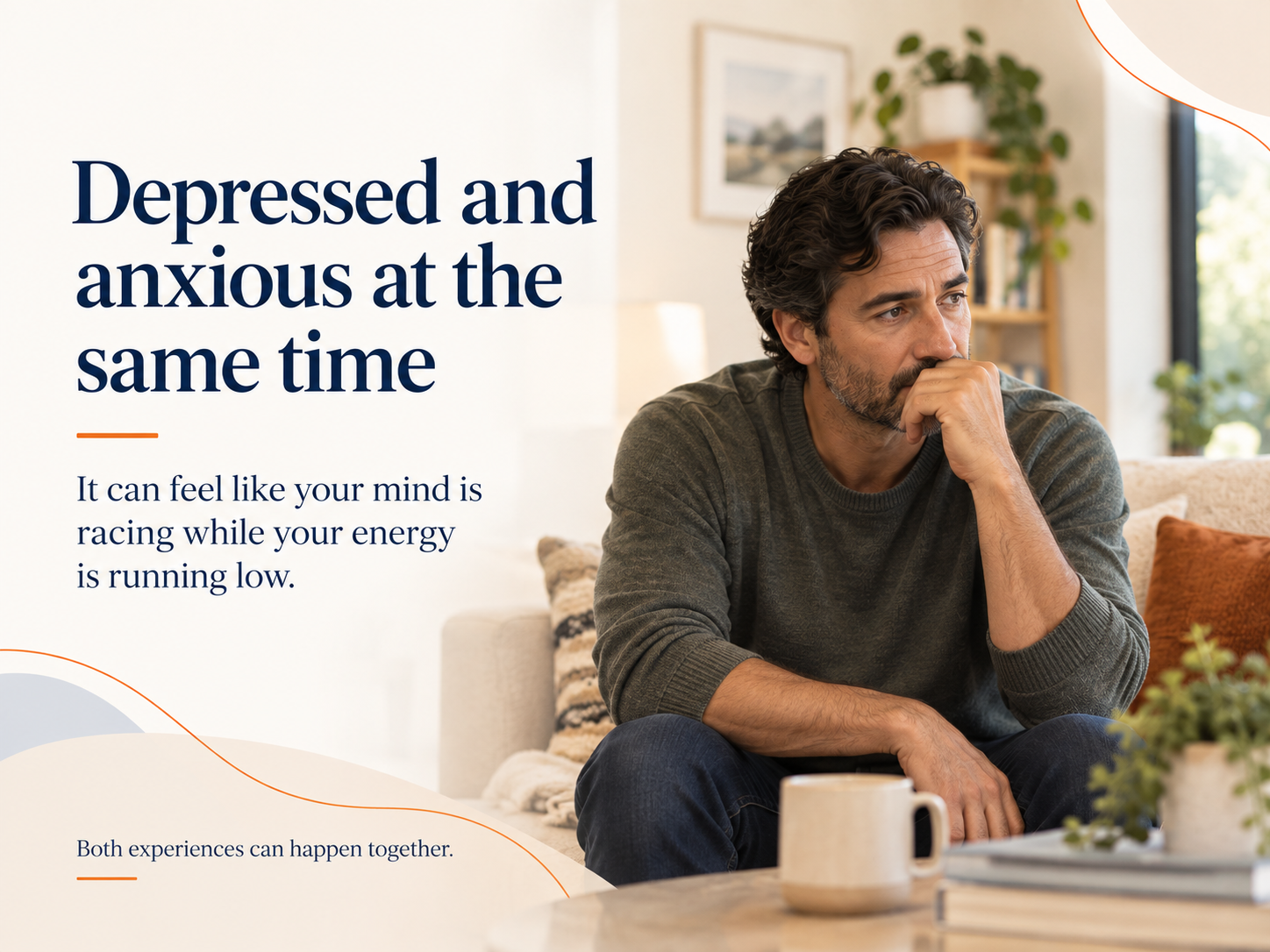
That's not a contradiction. That's the most common presentation of depression there is.
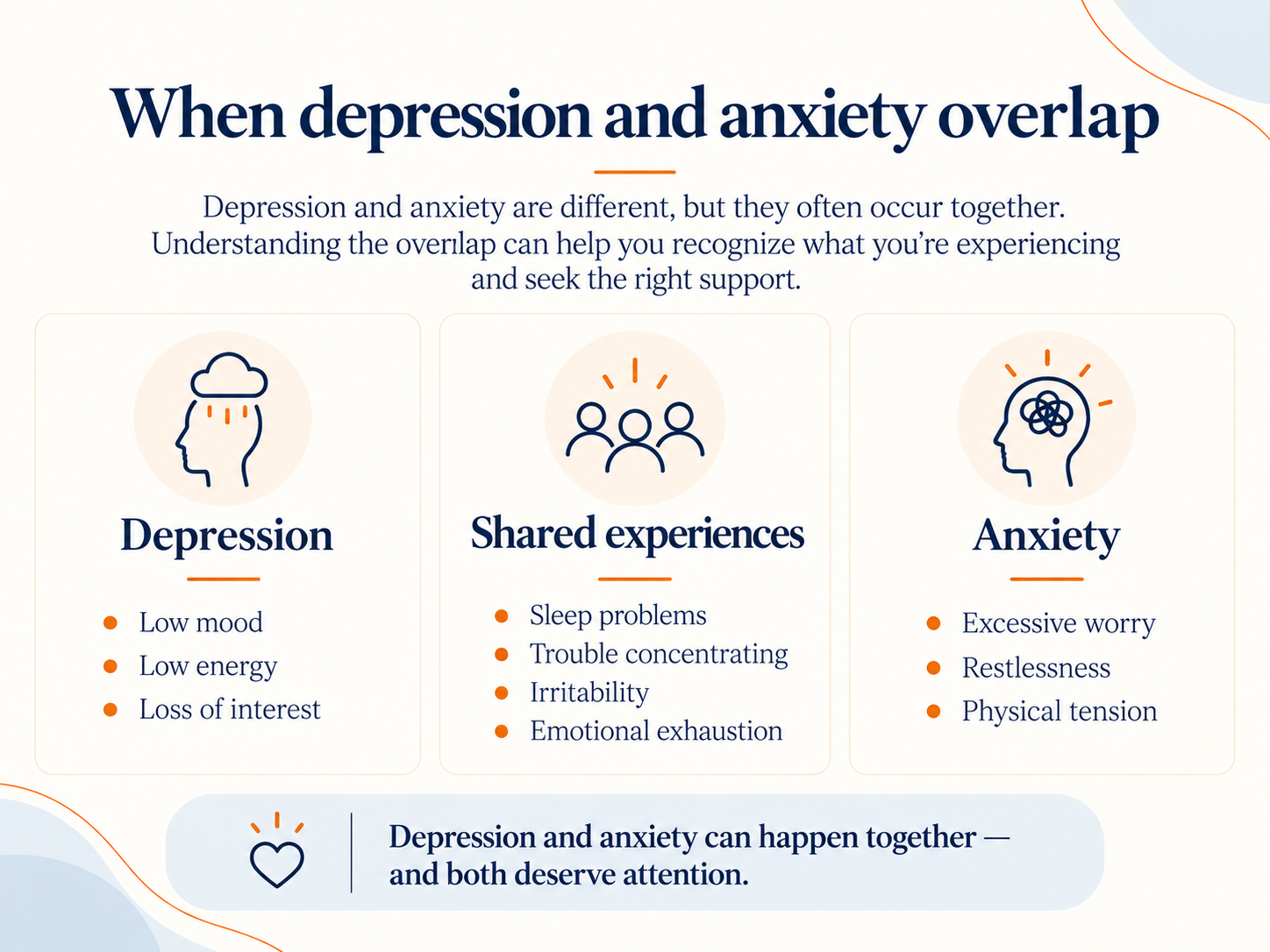
Somewhere around half to two-thirds of people with major depression also meet criteria for an anxiety disorder, most often generalized anxiety disorder. The reverse is also true. Anxiety and depression share genetics, share brain circuits, and share triggers. Chronic stress feeds both. Poor sleep worsens both. And each one makes the other harder to treat.
If your intake paperwork showed a moderate score on both a depression screen (the PHQ-9) and an anxiety screen (the GAD-7), you're not an unusual case. You're the standard one.
Why the combination is harder to treat
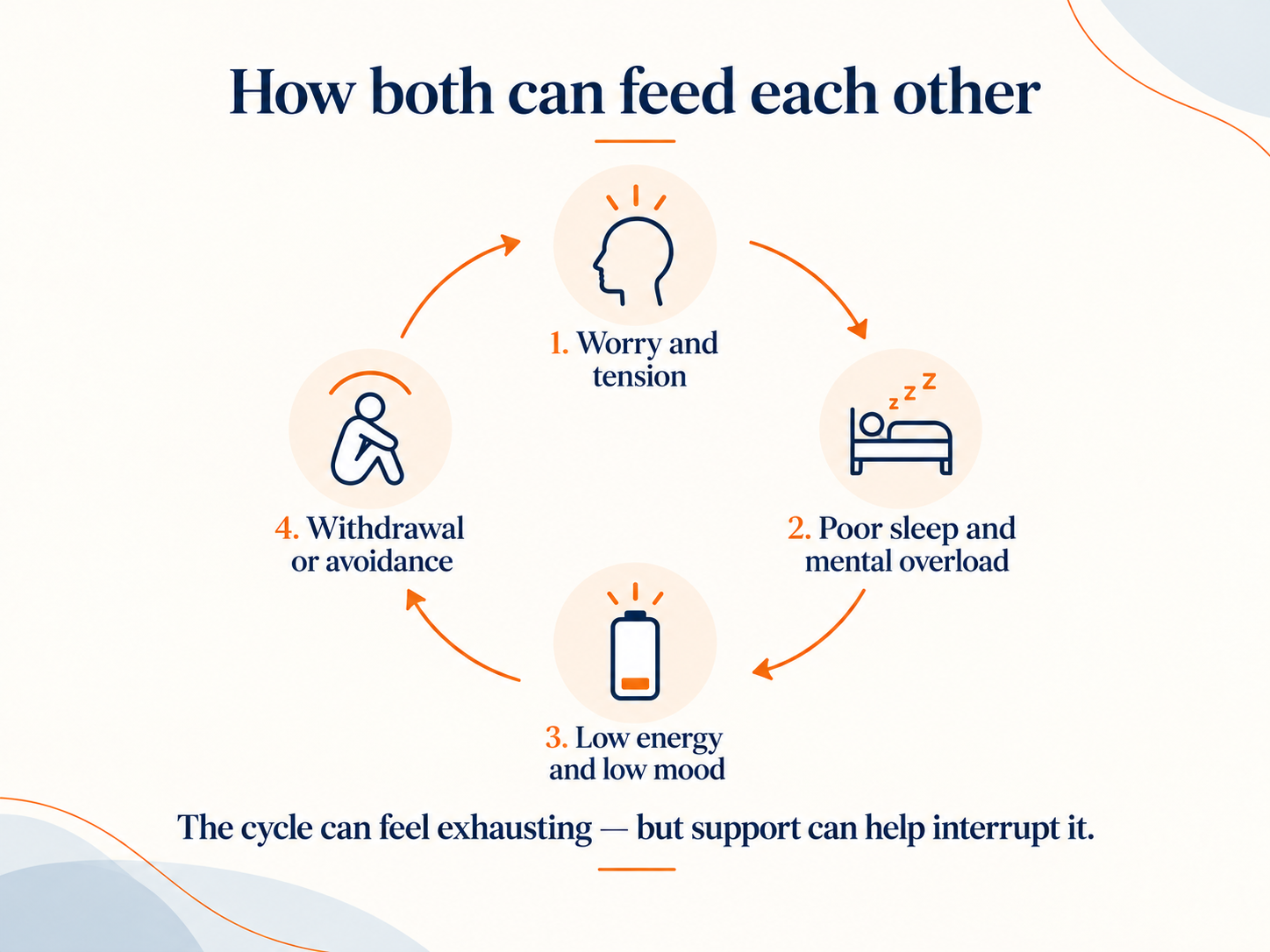
Clinicians pay attention to anxious depression for a practical reason: it tends to respond less well to standard antidepressants. People with both conditions are more likely to have residual symptoms after a medication trial, more likely to relapse, and more likely to end up with an "as needed" anti-anxiety medication on top of their antidepressant just to get through the worst days.
The anxiety also tends to hide the depression from other people. If you're worried, tense, and irritable, the people around you see someone who's stressed, not someone who's depressed. You may have spent years being told to relax or take a vacation, when what you actually needed was treatment.
What the overlap looks like day to day
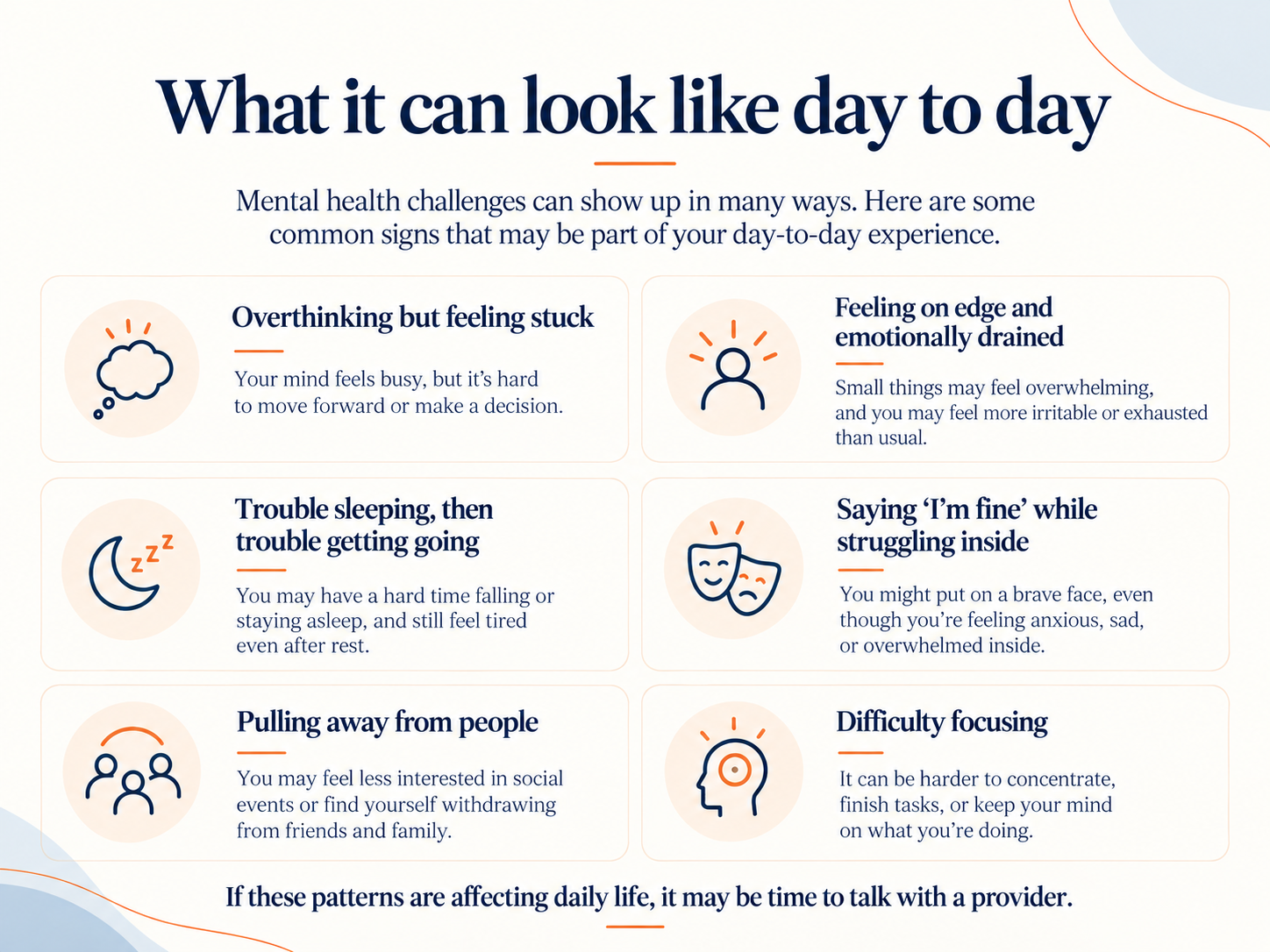
People with anxious depression often describe:
- Insomnia that's driven by worry, not just low mood
- Irritability that surprises them and the people they love
- Trouble concentrating because their mind won't settle on one thing
- Physical symptoms: headaches, stomach problems, muscle tension, a dry mouth from stress or from medication
- A sense that something bad is about to happen, without being able to say what
- Exhaustion that doesn't improve with rest
If you've been treating the depression and wondering why you still feel wired and on edge, the anxiety piece may be the reason the whole picture hasn't resolved.
Why a circuit-level treatment matters here
Here's the part most people never hear explained. Depression and anxiety don't just share symptoms; they share hardware. The region behind your forehead called the dorsolateral prefrontal cortex is responsible for regulating mood, and it's also responsible for putting the brakes on the brain's threat and worry system. When that region is underactive, two things happen at once: mood drops, and the worry system runs unchecked.
Medication changes the chemical environment those circuits sit in. It doesn't directly retrain the circuit. That's one reason someone can be on a high dose of an SSRI, plus a sleep aid, plus a benzodiazepine, and still feel both flat and on edge.
Transcranial magnetic stimulation (TMS) works differently. It uses focused magnetic pulses to stimulate that underactive region directly, with no anesthesia and nothing entering your bloodstream. And because the target sits at the intersection of the mood network and the worry network, patients treated for depression frequently report that their anxiety eases alongside their mood.
Curious whether you'd qualify?
If you've tried medication and you're still not yourself, you may be a candidate for SAINT®. Our team will give you a straight answer.
What SAINT adds
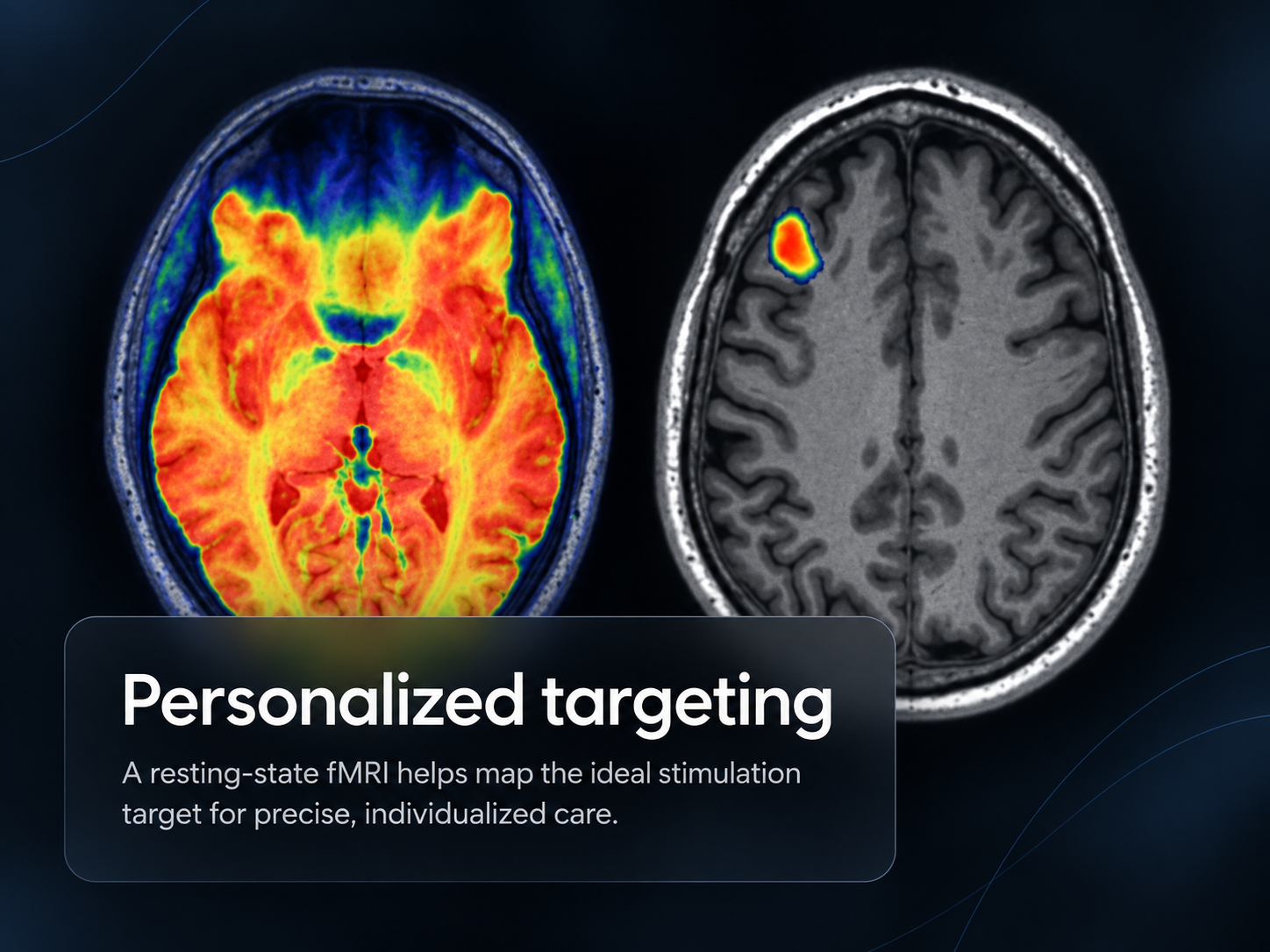
Personalized fMRI Brain Targeting
Maps individual circuits where depression and anxiety overlap before treatment.
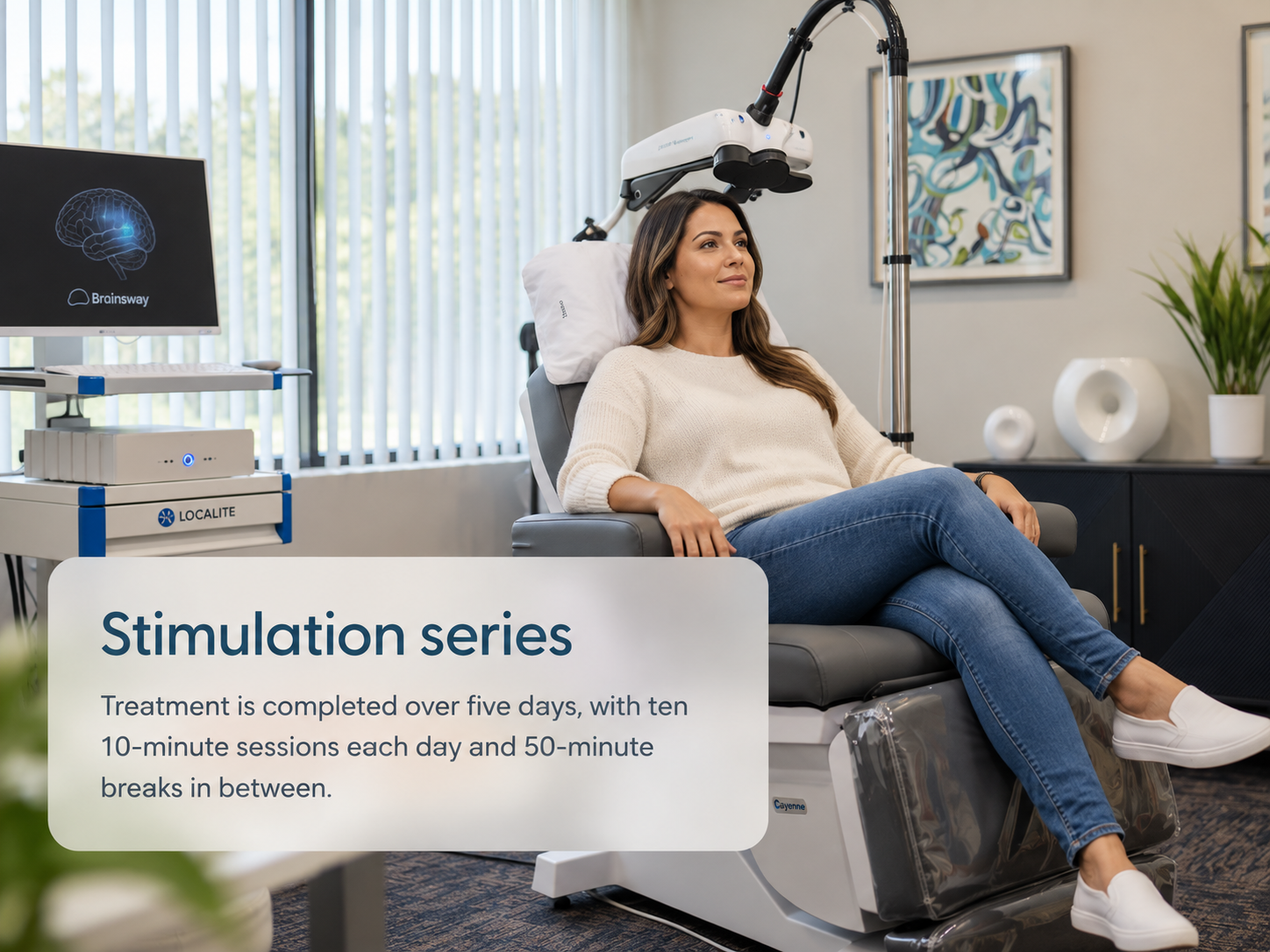
Five-Day Stimulation Series
Ten 10-minute sessions per day with 50-minute breaks; awake and alert throughout.
SAINT (Stanford Accelerated Intelligent Neuromodulation Therapy) is an accelerated, FDA-cleared form of TMS developed at Stanford's Brain Stimulation Lab. It's indicated for adults with major depressive disorder who haven't gotten adequate relief from antidepressants in their current episode, which describes a large share of people with anxious depression.
What makes it especially relevant when depression and anxiety are tangled together is precision. Standard TMS finds its target using external measurements of the head. SAINT uses a functional MRI of your own brain. Here's how it works at a Verified SAINT® Provider like Neuro Wellness TMS Centers of America:
- Consultation (Zoom web conference). You meet with our clinical team over a convenient Zoom call. As your evaluation evolves, you will also have the option to meet with our psychiatrist by Zoom web conference or in person at our clinic. You meet with our clinical team to review your depression and anxiety symptoms, your medication history, and whether SAINT is right for you.
- fMRI brain scan (mandatory in person). A roughly 45-minute functional MRI maps how your individual brain networks are wired and where they're communicating poorly. (Mandatory in-person scan at an imaging partner center.)
- Personalized targeting. A targeting algorithm reads your scan and identifies the exact location where stimulation will most effectively reach the mood-regulation network. Neuronavigation guides the coil to that spot for every session.
- Five-day stimulation series (mandatory in person). In-person treatment Monday through Friday at our Coral Springs clinic. Ten 10-minute sessions per day, with 50-minute breaks in between, for five consecutive days. Five clinic visits, compared with 30 to 36 for conventional TMS. Most patients notice a change in mood within the first couple of days.
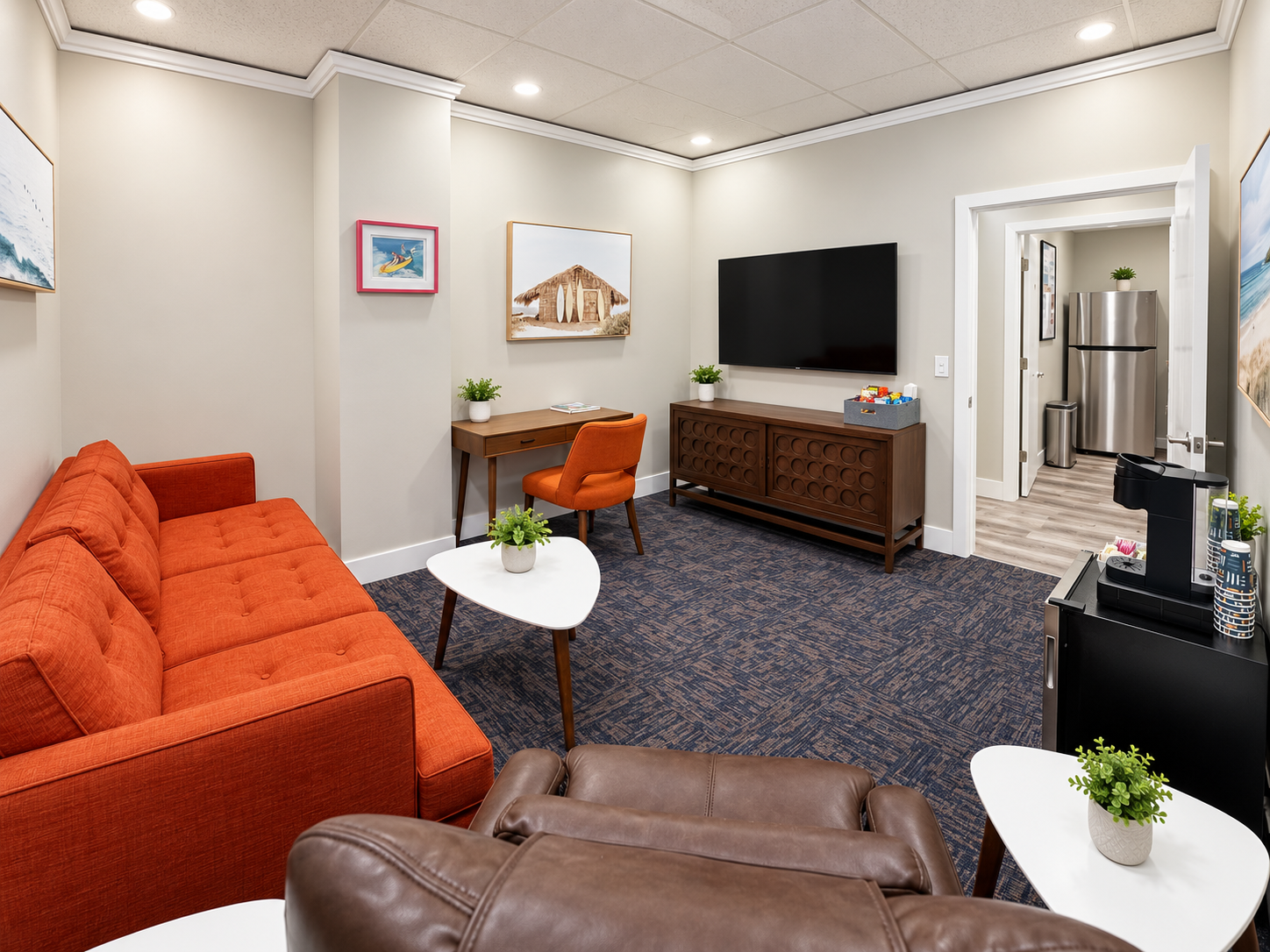
Private Suites & Dedicated SAINT® Lounge Wing
Designed for anxious patients who need a calm, soothing environment. Between sessions, you retreat to your own private suite with quiet workstations, Keurig coffee, refrigerator, and streaming TV. Have lunch in peace while our on-site care team ensures everything is running smoothly. Loved ones and companions are always welcome.
What the results look like
SAINT® vs. Other Depression Treatments
| Treatment | SAINT® | ECT | TMS | Medication |
|---|---|---|---|---|
| Remission | 79–90% | 48% | 17–32% | 14% |
| Time | 2.6 days | 3 wks | 3.5 wks | 6–12 wks |
SAINT® uses personalized fMRI targeting and compresses treatment into 5 days — the highest remission rate, in the shortest time, without anesthesia. Individual results vary.
In the clinical trials behind SAINT's FDA clearance, participants had treatment-resistant depression and had already failed prior treatments. Seventy-nine percent reached remission, not just improvement, with an average time to remission of about two and a half days. Across more than 400 trial patients, 85 percent experienced symptom relief, with no serious adverse events.
Side effects were generally mild: headache, fatigue, and temporary scalp discomfort at the treatment site. A small number of participants reported transient anxiety during treatment, which is worth knowing if anxiety is already part of your picture; your provider will monitor for it. SAINT isn't appropriate for people with non-removable metal in or near the head or an implanted device, and you'll be screened for these at your consultation.
One honest note: SAINT is FDA-cleared for major depressive disorder, not for anxiety disorders as a standalone diagnosis. What we're describing is the well-documented pattern of anxiety improving as depression resolves, not a separate anxiety treatment. If your anxiety exists without significant depression, a different approach may fit better, and we'll say so.
What treatment doesn't require you to do
You don't have to figure out which condition is "primary." You don't have to stop your medication; most patients continue their existing regimen through treatment. You don't have to prove that your anxiety is real or that your depression is bad enough. Both are real, both are affecting your life, and both are worth treating.
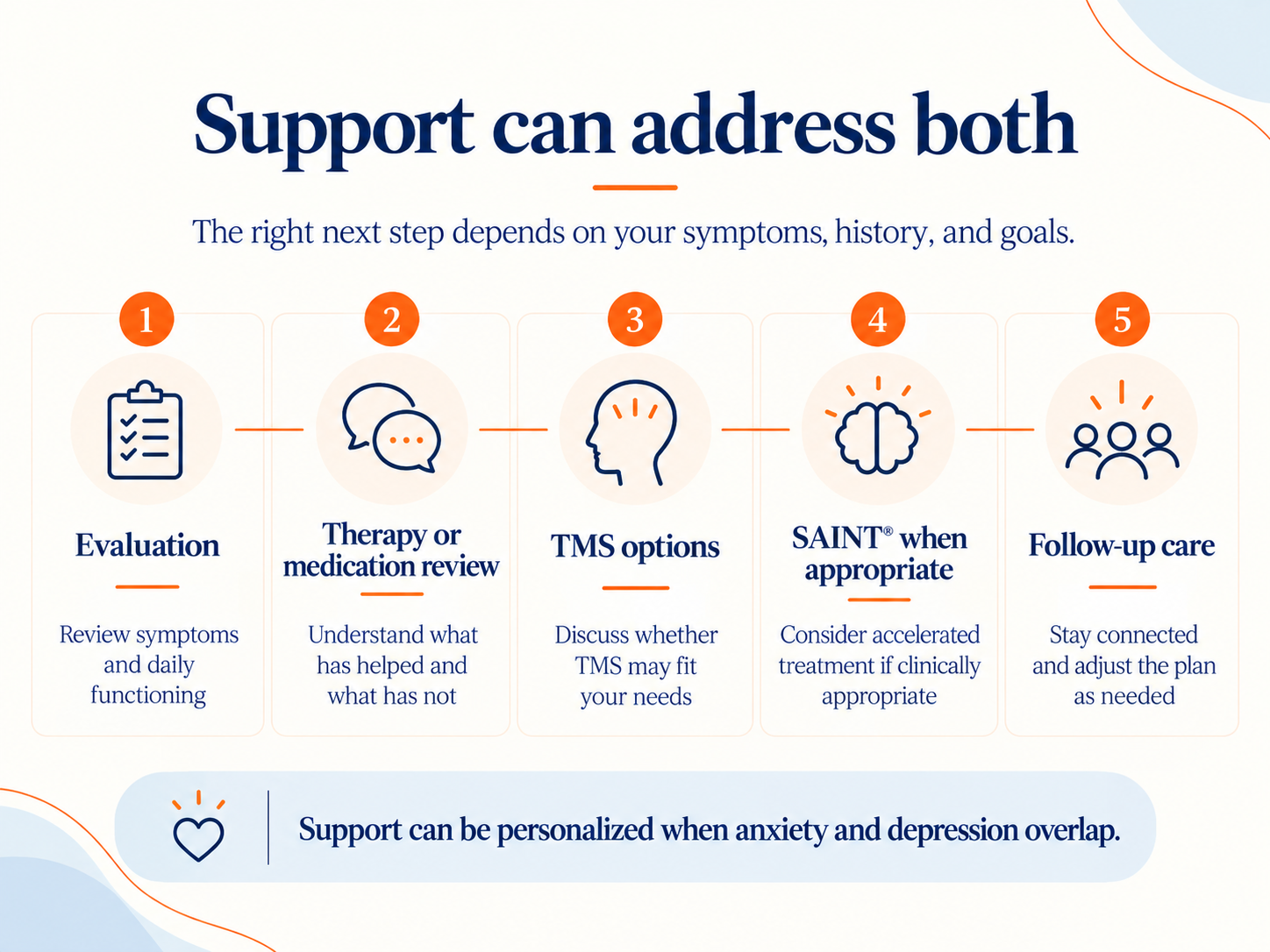
What to do next
If you've been carrying both of these at once and feeling like your treatment has only addressed half of it, a consultation is a reasonable next step. At Neuro Wellness TMS Centers of America, the first appointment is an evaluation, not a commitment. We'll look at your full picture: your depression symptoms, your anxiety symptoms, your medication history, and how the two interact. We'll tell you plainly whether SAINT is likely to help, and what the process would look like from your first scan to your final session. Insurance coverage for SAINT varies by plan; our team can help you understand your options, including prior authorization and self-pay. Schedule a consultation: 954-827-9793.
Questions About Depression, Anxiety & SAINT
Can you have depression and anxiety at the same time?
Why does anxiety make depression harder to treat?
Can TMS help anxiety if I'm being treated for depression?
Is SAINT FDA-cleared for anxiety?
Do I have to stop my medication to do SAINT?
What if SAINT isn't right for me?
Explore Related Resources
When Anxiety, Insomnia, and Depression Overlap
Why treating the whole pattern matters when symptoms travel together.
You've Tried Everything. Why Is the Depression Still Here?
What treatment-resistant depression means and why medications don't work for everyone.
Am I a Candidate for TMS?
What clinicians consider when evaluating TMS eligibility.
What Is SAINT TMS Therapy?
How the five-day, fMRI-guided protocol works.
Ready to talk to someone?
The hardest part is usually the first phone call. Everything after that is a series of small, defined steps.
You Don't Have to Pick Which One to Treat First.
If depression and anxiety have been tangled together and your treatment has only addressed half of it, speak with our team about whether SAINT may be appropriate for you.