High-Functioning Depression: When Holding It Together Is the Problem
From the outside, your life looks fine. From the inside, you haven't enjoyed anything in months. Functioning is not the same as being okay — and it's one of the main reasons severe depression goes untreated for years.
Last updated September 9, 2026.
Want to know if SAINT® is right for you?
Tell us about your treatment history and symptoms. A consultation is an evaluation, not a commitment — and it starts with your story.
Functioning is not the same as being okay
From the outside, your life looks fine. Better than fine, maybe. You go to work every day. You're married or partnered. You have kids who need you, and you show up for them. You have friends who'd say you're doing well.
From the inside, it's a different story. You haven't enjoyed anything in months. You're exhausted in a way that sleep doesn't fix. You're irritable with the people you love most and then ashamed of it. You forget things. You avoid things. You lie awake at night with your mind spinning, and you get up in the morning and do it all again.
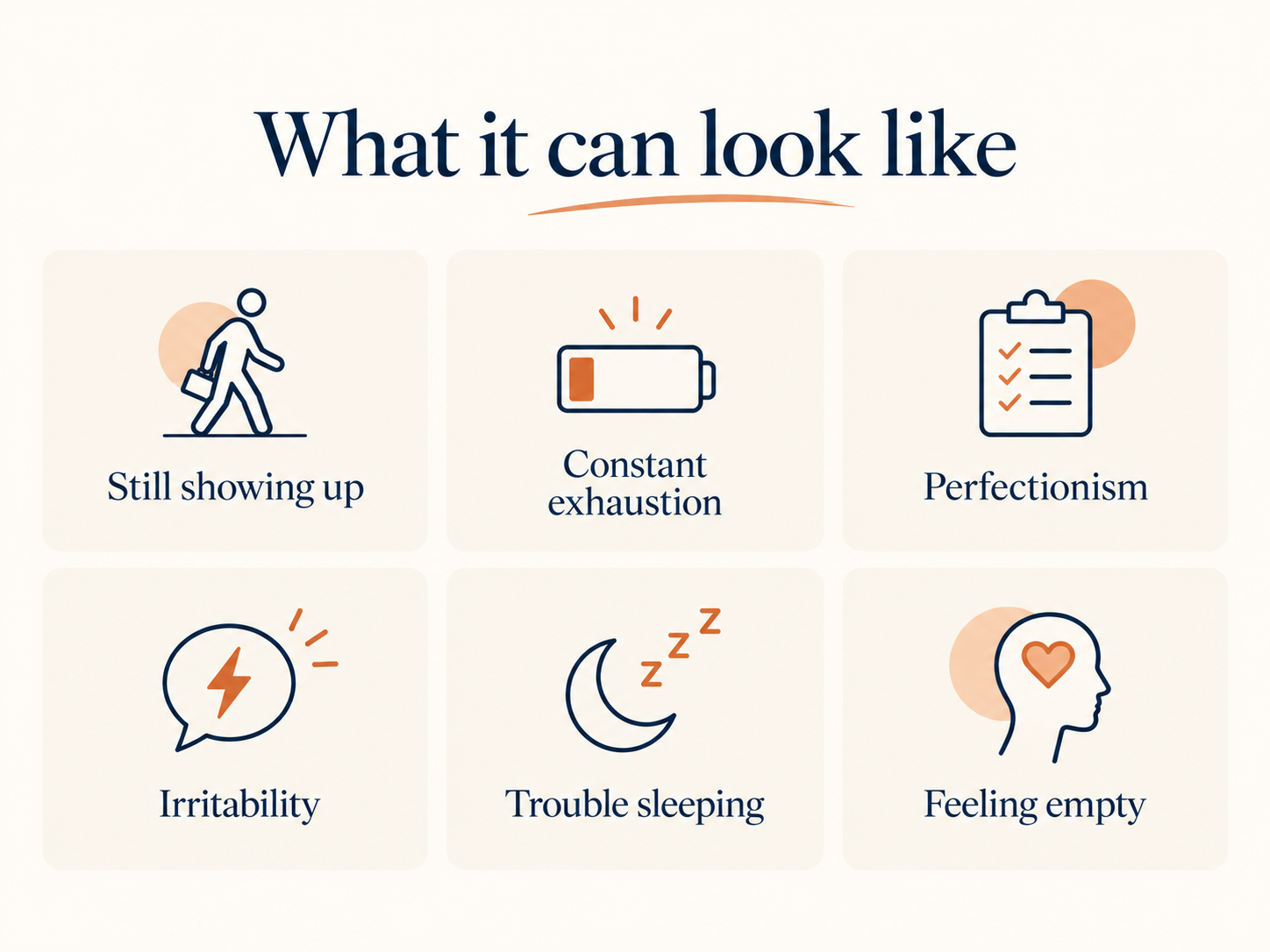
Signs High-Functioning Depression Hides in Plain Sight
Still showing up at work or home doesn't mean you're okay. Constant exhaustion, emotional flatness, and sleeplessness often hide behind a polished exterior.
You've probably told yourself that it can't be that bad, because look at everything you're still managing to do. That reasoning feels logical. It's also one of the main reasons people with severe depression go untreated for years.
Here is something a lot of people don't realize: the diagnostic criteria for major depressive disorder say nothing about whether you can hold a job. Severity is measured by the number and intensity of symptoms, not by how much you're still managing to do despite them.
Someone who gets up, works a full day, cooks dinner, helps with homework, and collapses into bed with a hollow feeling can meet every criterion for severe, recurrent depression. The functioning isn't evidence against the diagnosis. It's evidence of how much effort you're spending to hide it.
Clinicians sometimes call this "high-functioning depression." It's not a formal diagnosis, but it describes a real and common pattern: people whose depression is serious by every clinical measure, but who have built enough structure and obligation around themselves that the illness stays invisible.
What it actually costs
The trouble with high-functioning depression is that the functioning has a price, and you're the one paying it.
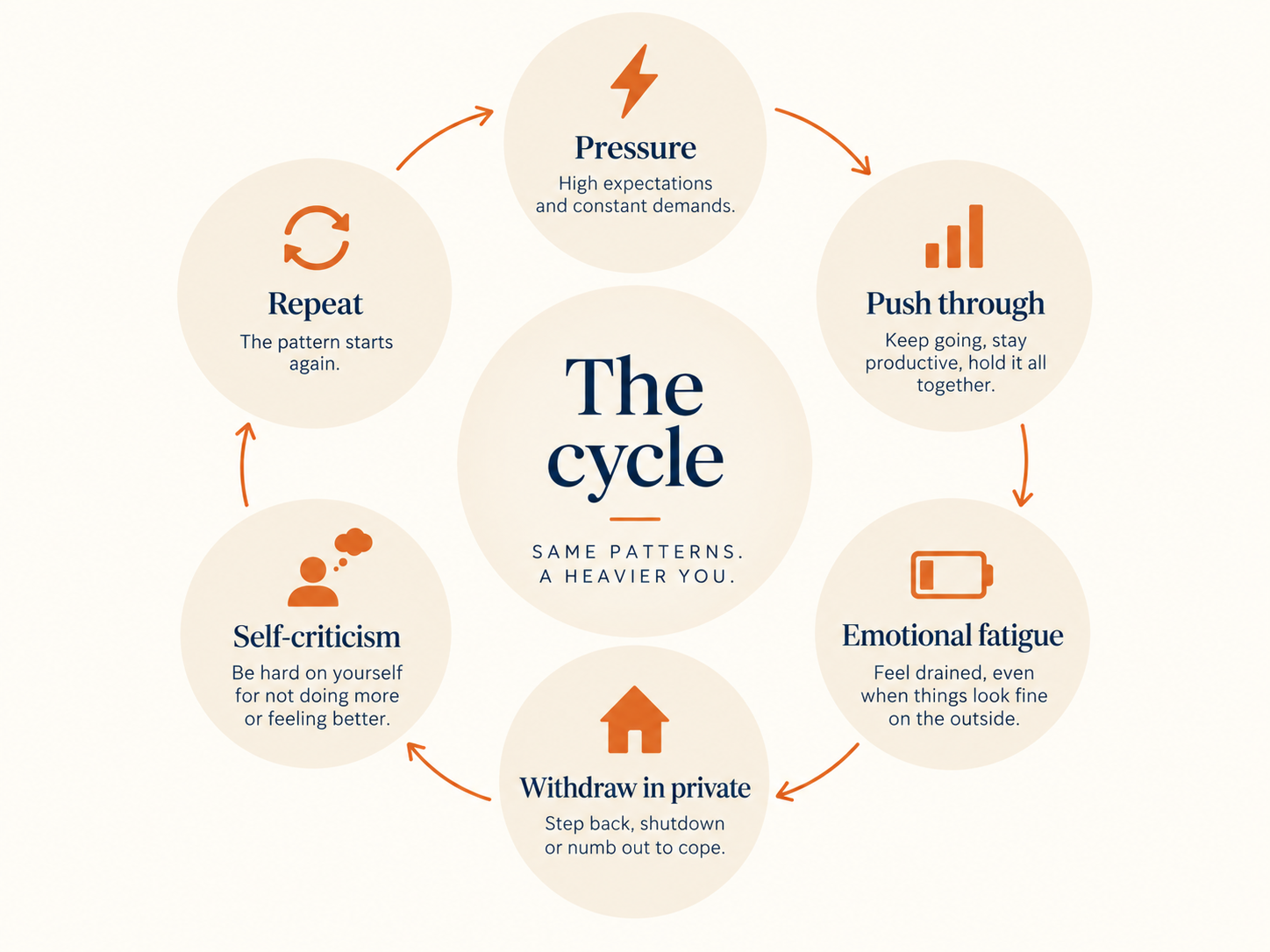
The High-Functioning Depression Cycle
Same patterns, a heavier you. Constant pressure to perform leads to pushing through, emotional exhaustion, private withdrawal, and self-blame.
- Anhedonia. You do the things, but you don't feel them. Your child laughs and you notice it from a distance. Dinner with friends is something to get through.
- Irritability. The energy it takes to hold everything together leaves nothing for patience. Small frustrations turn into snapping, then guilt.
- Cognitive load. Concentration and memory suffer. You reread the same email three times. You forget a commitment and feel like a failure.
- Physical toll. Headaches, stomach problems, insomnia. The body keeps score even when you're refusing to.
- Isolation. Because you look fine, no one asks. And because no one asks, you don't say.
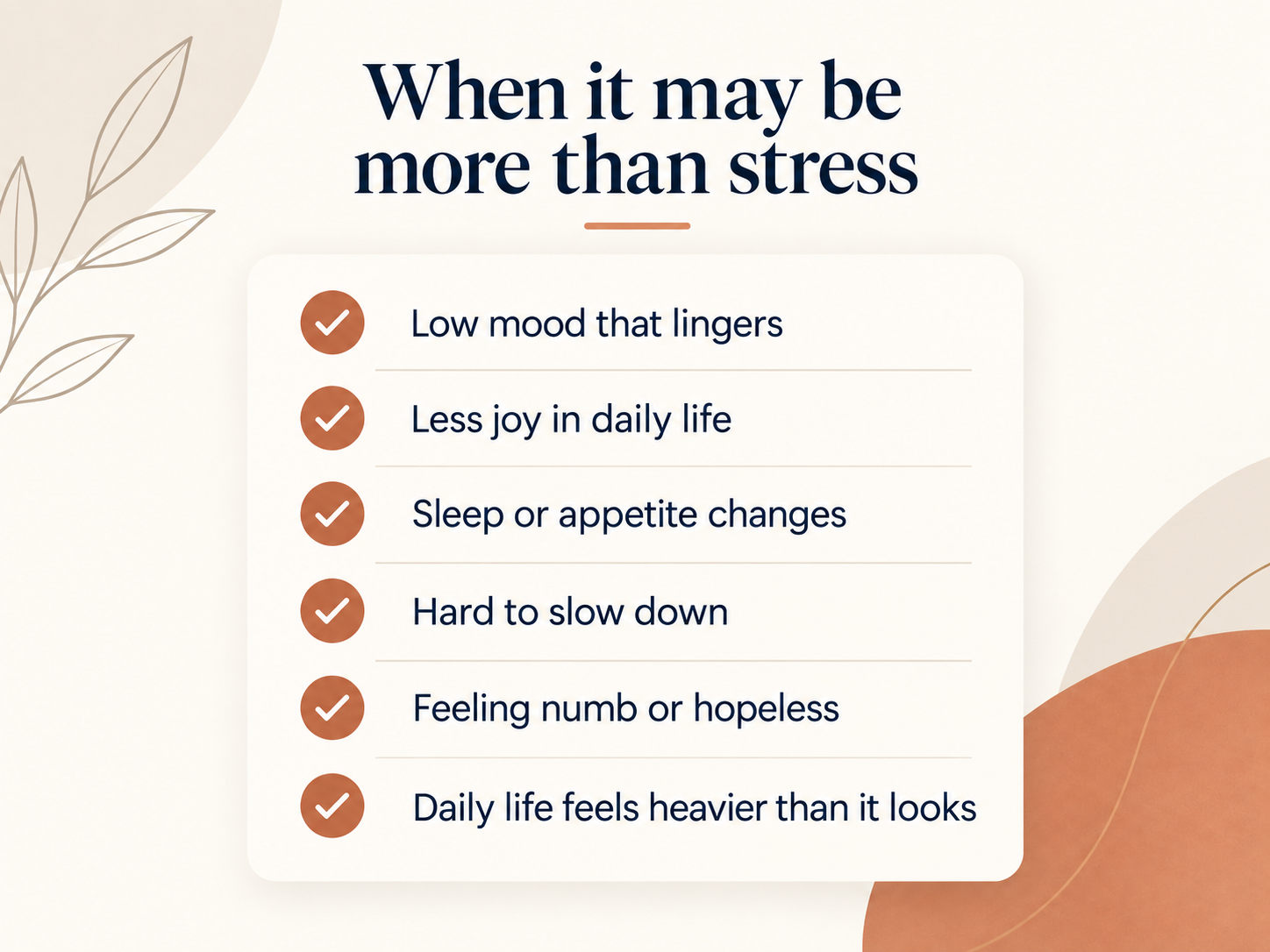
Recognizing When It's More Than Everyday Stress
If low mood lingers, sleep is disrupted, and daily life consistently feels heavier than it looks on paper, it's time to evaluate the root cause.
Many people in this situation eventually do seek help, but they wait until something forces the issue. A comment from a spouse. A mistake at work. A moment with their kids that should have been joyful and wasn't.
Why treatment often stalls
People with high-functioning depression tend to get a certain kind of treatment: a therapist, an SSRI, maybe something for sleep or anxiety layered on top. And often it helps, partly. Enough to keep functioning. Not enough to actually feel well.
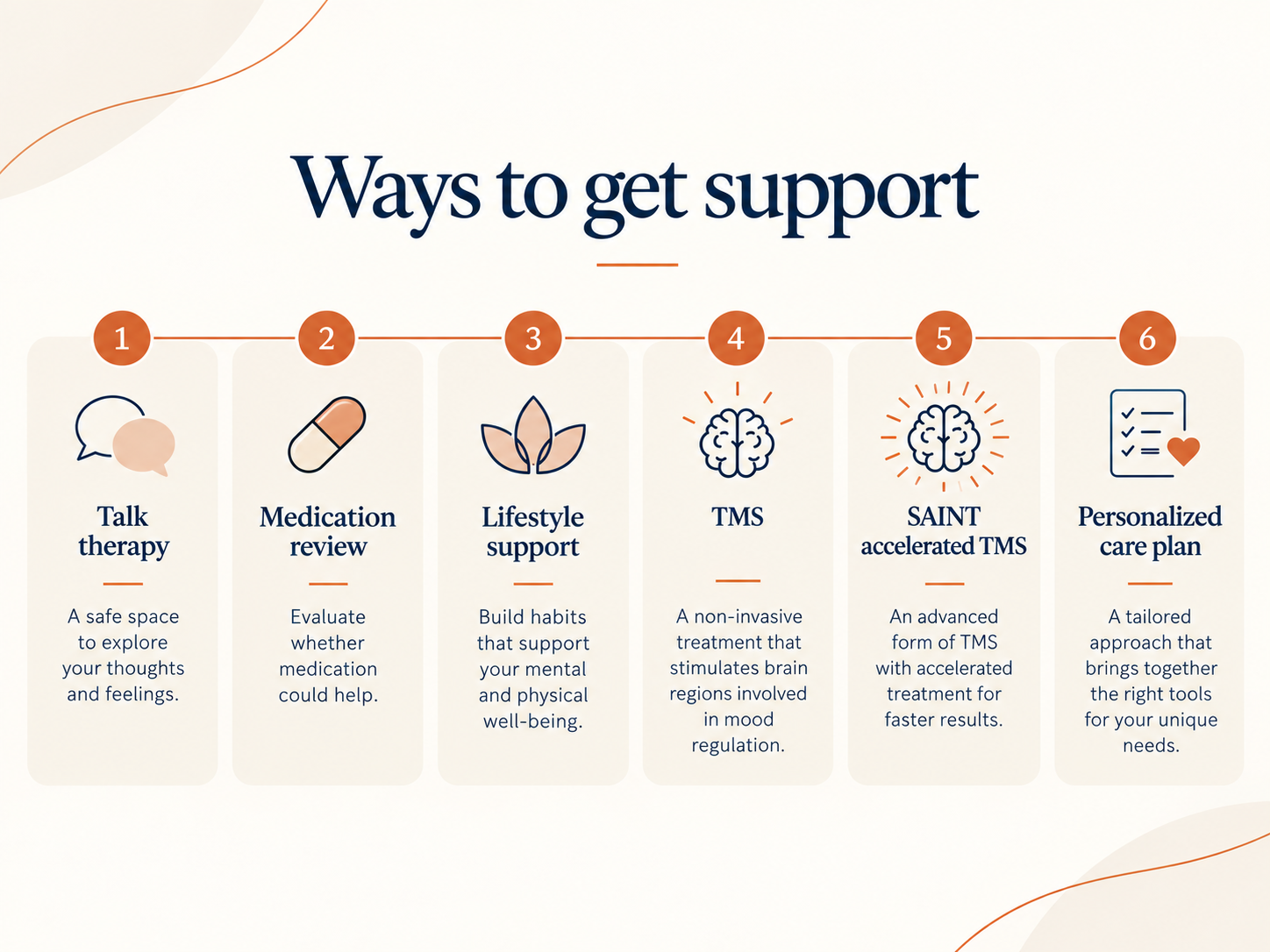
Expanding Your Care Plan Beyond One Tool
A comprehensive mental health path can integrate talk therapy, medication review, neuromodulation like TMS or SAINT® accelerated TMS, and personalized care.
Because you're still going to work, the partial response gets treated as success. The dose gets adjusted, a second medication gets added, and you learn to live at 60 percent. Nobody uses the phrase "treatment-resistant," because you don't look like someone who's resisting treatment. You look like someone who's coping.
But if you've had two or more medication trials and still feel like this, that's exactly what it is.
Why medication alone often leaves you at 60 percent
Antidepressants work on brain chemistry. But depression is also a circuitry problem. Brain imaging consistently shows that the region behind the forehead called the dorsolateral prefrontal cortex, which regulates mood, motivation, and attention, is underactive in depression. Medication changes the chemical environment around that circuit. It doesn't directly retrain it.
That's why someone can take their medication faithfully, function at a high level, and still feel fundamentally unchanged underneath. The chemistry is being managed. The circuit is still underperforming.
Transcranial magnetic stimulation (TMS) works on the circuit itself, using focused magnetic pulses to stimulate that underactive region directly. There's no anesthesia and nothing enters your bloodstream. The barrier for busy people has always been time: standard TMS requires one session a day, five days a week, for six to nine weeks. For someone with a job and a family, 30 to 36 clinic visits is a real obstacle.
Curious whether you'd qualify?
If you've tried medication and you're still not yourself, you may be a candidate for SAINT®. Our team will give you a straight answer.
A treatment that fits a full life
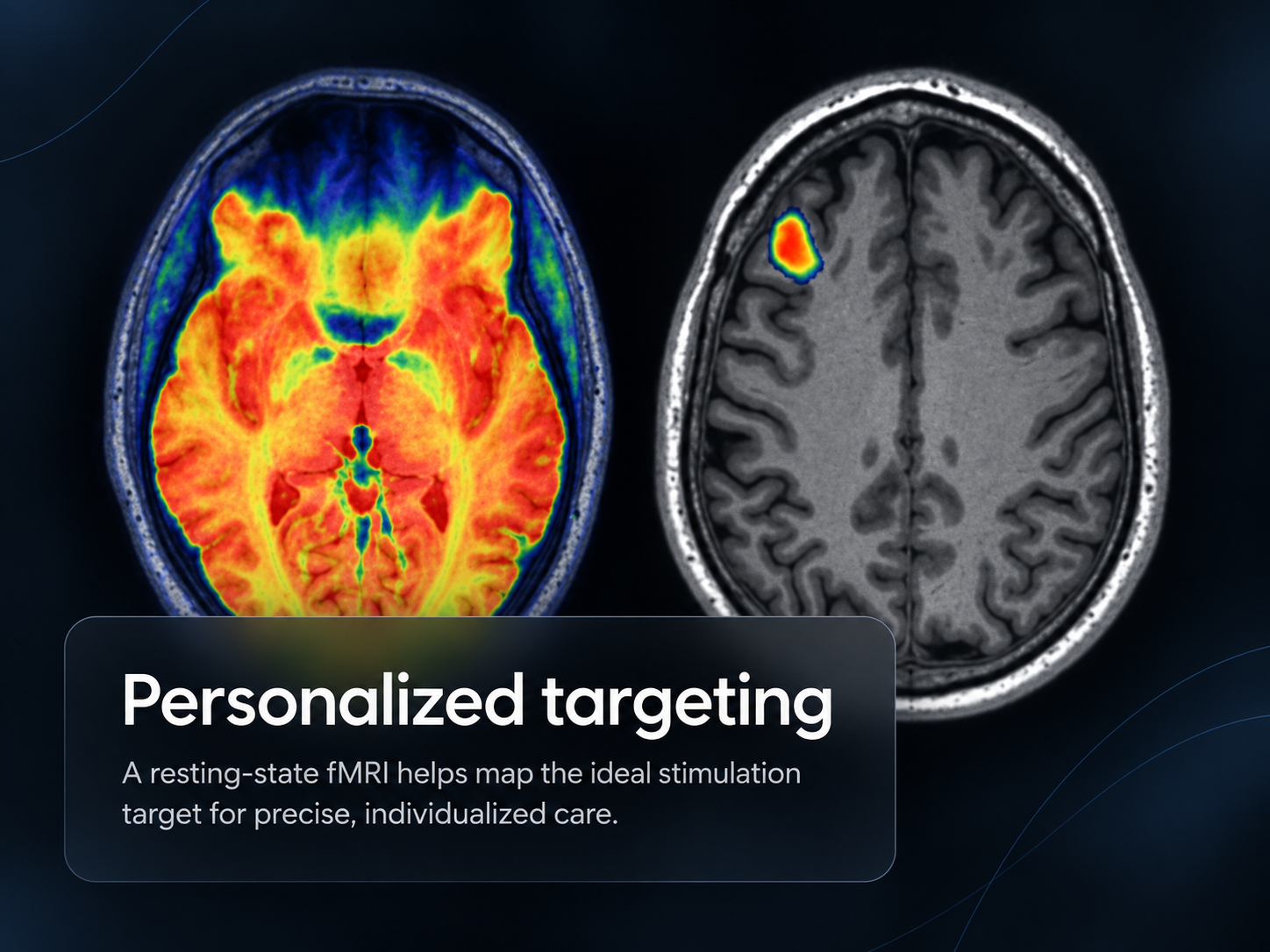
Personalized fMRI Brain Targeting
Custom targeting guided by resting-state fMRI maps to fit your unique brain wiring.
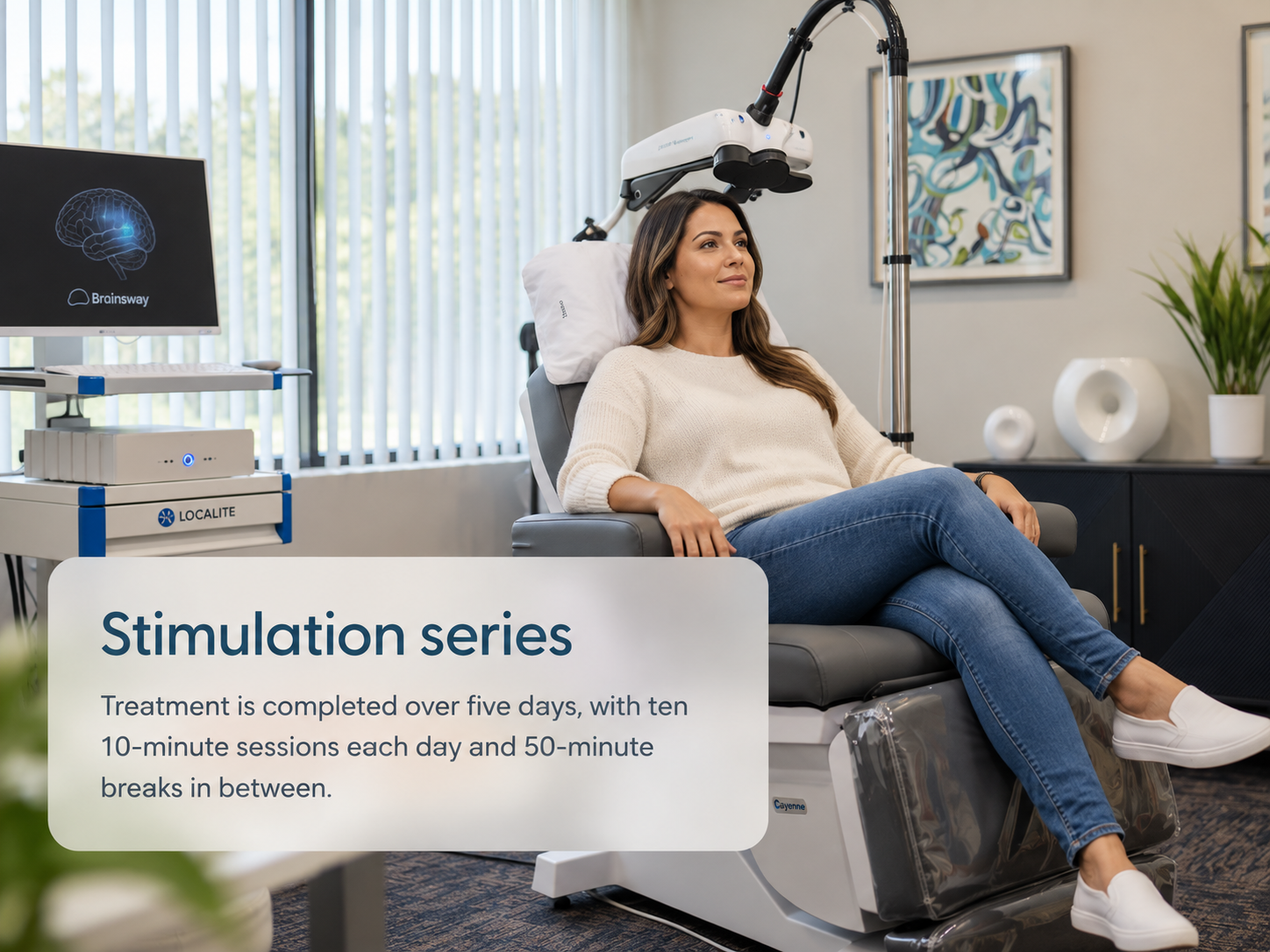
Five-Day Stimulation Series
Completed in 5 consecutive days—ten 10-minute sessions per day with zero downtime.
SAINT (Stanford Accelerated Intelligent Neuromodulation Therapy) is an accelerated, FDA-cleared form of TMS developed at Stanford's Brain Stimulation Lab. It's indicated for adults with major depressive disorder who haven't gotten adequate relief from antidepressants in their current episode. And it was built around a schedule that a working parent can actually manage.
Here's how it works at a Verified SAINT® Provider like Neuro Wellness TMS Centers of America:
- Consultation (Zoom web conference). You meet with our clinical team over a convenient Zoom call. As your evaluation evolves, you will also have the option to meet with our psychiatrist by Zoom web conference or in person at our clinic. You meet with our clinical team to review your history, your medication trials, and your current symptoms, and to confirm you're a candidate. We take what you're carrying seriously, regardless of how it looks from the outside.
- fMRI brain scan (mandatory in person). A roughly 45-minute functional MRI maps how your individual brain networks are wired and where they're communicating poorly. (Mandatory in-person scan at an imaging partner center.)
- Personalized targeting. A targeting algorithm reads your scan and identifies the exact location where stimulation will most effectively reach the mood-regulation network. Neuronavigation guides the coil to that spot for every session.
- Five-day stimulation series (mandatory in person). In-person treatment Monday through Friday at our Coral Springs clinic. Ten 10-minute sessions per day, with 50-minute breaks in between, for five consecutive days. That's one week off work, or one week of arranged childcare, instead of two months of daily appointments. Most patients notice a change in mood within the first couple of days.
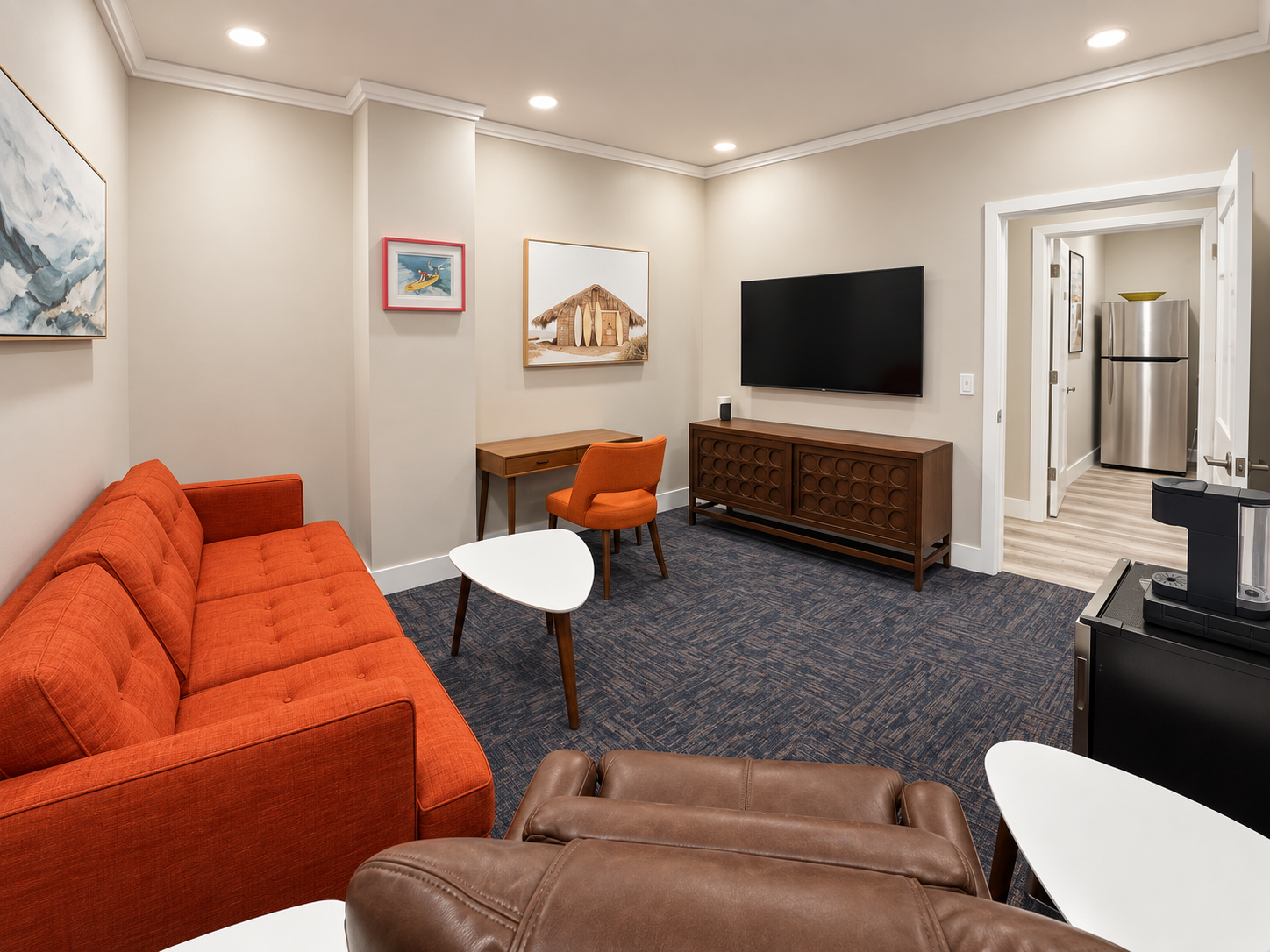
Private Suites & Dedicated SAINT® Lounge Wing
Designed for comfort, privacy, and full outpatient convenience. During your 50-minute breaks, relax in your own private suite, take video calls from a quiet work desk, have lunch, or spend time with family. Our on-site care team ensures you feel right at home all day.
What the results look like
Data from published trials in treatment-resistant depression. Individual results vary.
In the clinical trials behind SAINT's FDA clearance, participants had treatment-resistant depression and had already failed prior treatments. Seventy-nine percent reached remission, not just improvement, with an average time to remission of about two and a half days. Across more than 400 trial patients, 85 percent experienced symptom relief, with no serious adverse events.
Side effects were generally mild: headache, fatigue, and temporary scalp discomfort at the treatment site. SAINT isn't appropriate for people with non-removable metal in or near the head or an implanted device, and you'll be screened for these at your consultation.
You don't have to stop your current medications. Most patients continue their existing regimen through treatment. And you don't have to fall apart first. You qualify based on your history and your symptoms, not on whether you've stopped functioning.
Permission you might need to hear
You are allowed to want more than functioning. Getting through the day is not the goal of treatment. Feeling like yourself again is. If the people around you would be shocked to learn how bad it actually is, that's not a reason to keep hiding it. It's a reason to get it treated properly.
What to do next
If you've been holding it together for a long time and you're tired, a consultation is one hour that might change the trajectory of everything after it.

A Confidential, One-on-One Evaluation
A consultation is an open conversation about your history, pressures, and goals—never an obligation. We take the time to listen and map out what kind of care makes the most sense.
At Neuro Wellness TMS Centers of America, the first appointment is an evaluation, not a commitment. We offer private outpatient care with a dedicated care team and weekend availability, because we know your schedule is already full. We'll review your history and symptoms and tell you honestly whether SAINT is a good fit. If it is, we'll walk you through the scan, the schedule, and what to expect during your treatment week. Insurance coverage for SAINT varies by plan; our team can help you understand your options, including prior authorization and self-pay.
Schedule a consultation: 954-827-9793
If you are in crisis or thinking about harming yourself, please call or text 988 (Suicide and Crisis Lifeline) or go to your nearest emergency room. This article is for educational purposes and is not a substitute for individual medical advice.
Frequently Asked Questions
Can you have severe depression and still function at a high level?
What is high-functioning depression?
Why does high-functioning depression often go untreated for years?
If I'm still functioning, do I still qualify for treatment?
How is SAINT different from standard TMS for busy people?
Do I have to stop my medication to do SAINT?
Explore Related Resources
You've Tried Everything. Why Is the Depression Still Here?
What treatment-resistant depression means and why medications don't work for everyone.
Depressed and Anxious at the Same Time? You're Not Confused. You're Typical.
Why depression and anxiety overlap and how targeting shared brain circuits may help.
Am I a Candidate for TMS?
What clinicians consider when evaluating TMS eligibility.
What Is SAINT TMS Therapy?
How the five-day, fMRI-guided protocol works.
Ready to talk to someone?
The hardest part is usually the first phone call. Everything after that is a series of small, defined steps.
You Don't Have to Figure This Out Alone
Schedule a Consultation