"It Runs in My Family." What That Actually Means for Your Depression
It's often said with a shrug, as if the diagnosis came pre-installed and there's not much to do about it. That belief is half right and half wrong — and the wrong half can keep you stuck for years.
Last updated September 9, 2026.
Want to know if SAINT® is right for you?
Tell us about your treatment history and symptoms. A consultation is an evaluation, not a commitment — and it starts with your story.
What family history really predicts
Somewhere in your life you've said it out loud: My mom has depression. My sister has it too. My dad's a worrier, always has been. It runs in the family.
It's often said with a shrug, as if the diagnosis came pre-installed and there's not much to do about it. And there's a quieter version of the same thought that people don't say out loud: If it's genetic, maybe treatment won't really work. Maybe this is just who I am.
That belief is worth examining, because it's half right and half wrong, and the wrong half can keep you stuck for years.
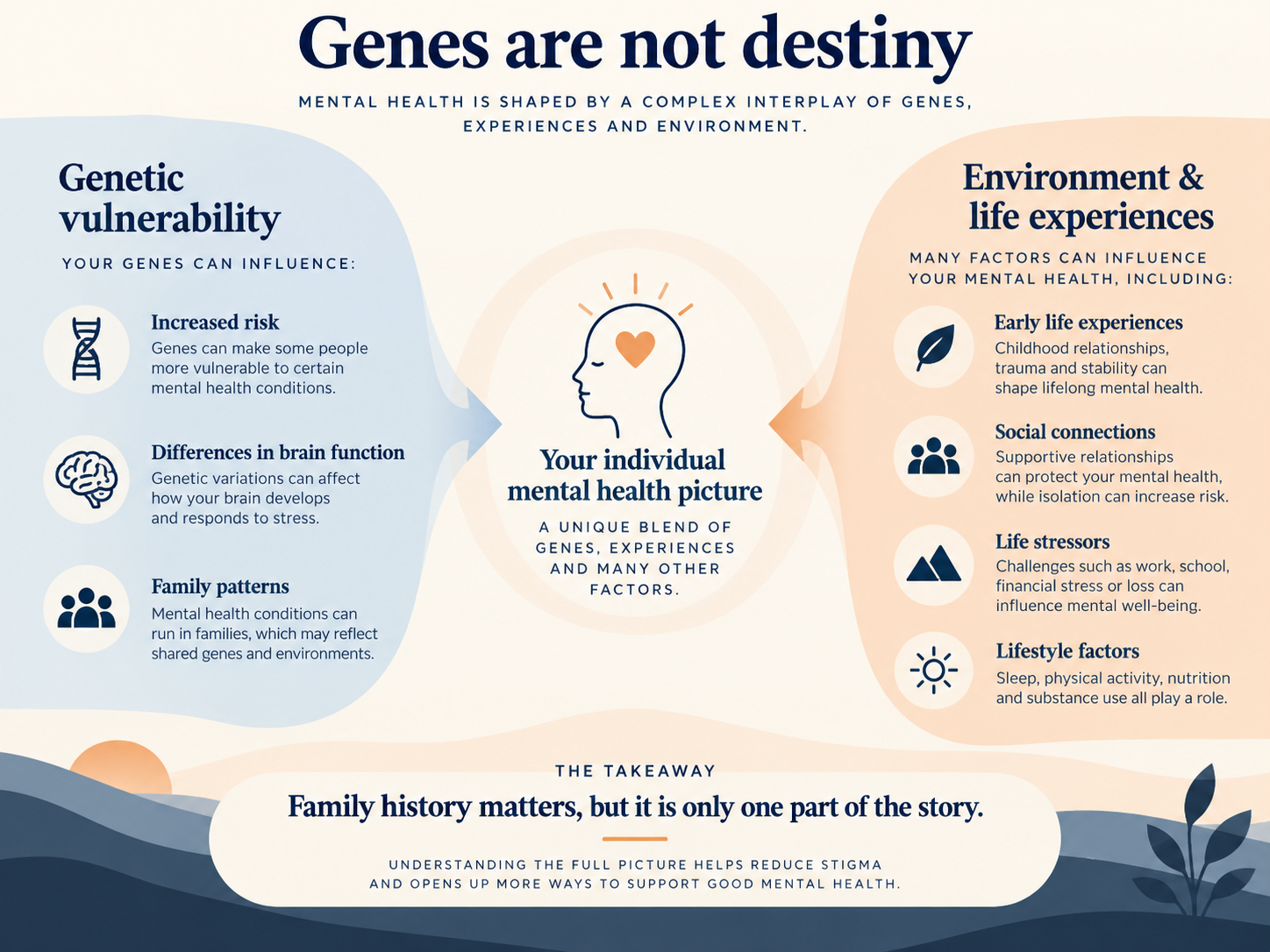
Depression does run in families. If a first-degree relative (a parent or sibling) has had major depression, your own risk is roughly two to three times higher than someone with no family history. Anxiety disorders and obsessive-compulsive disorder cluster in families too, and they often show up together across generations: depression in one relative, generalized anxiety in another, OCD in a third.
So the "it runs in the family" part is accurate. Heritability estimates for major depression sit around 35 to 40 percent, meaning a substantial share of the variation in who gets depressed is explained by genes.
But here's what people miss. A 40 percent heritability leaves 60 percent to everything else: life stress, sleep, illness, loss, relationships, and the ordinary accumulation of hard years. Genes load the gun. They don't pull the trigger, and they certainly don't decide whether treatment works.
What family history does not predict
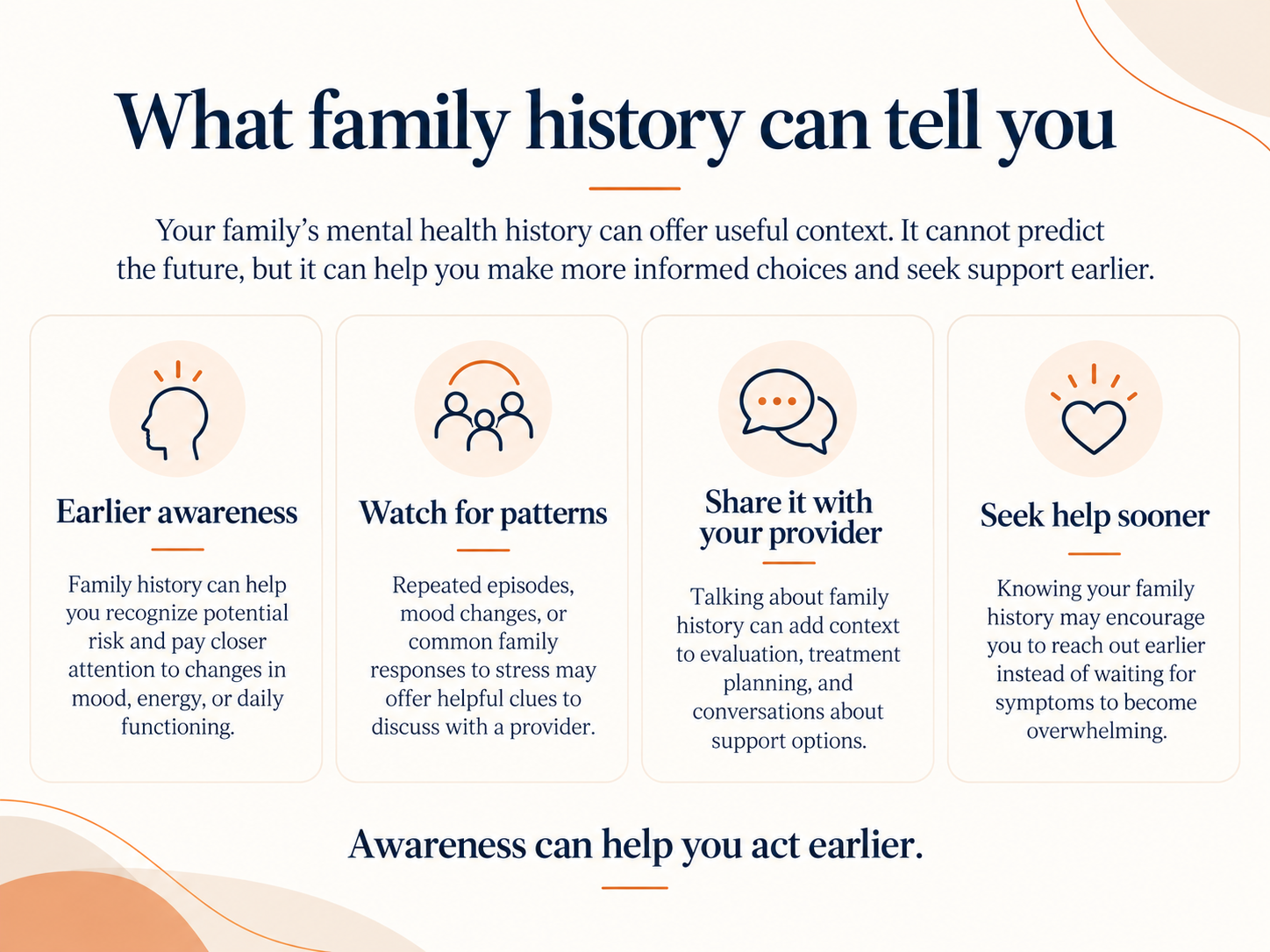
It does not predict that your depression is untreatable. There's no gene that makes someone immune to therapy, medication, or brain stimulation. People with a strong family history often respond to treatment just as well as anyone else; they simply had a higher chance of needing it in the first place.
It does not predict that you'll have the same course your parent did. Your mother's depression at forty, in a different decade with different treatments available, is not a preview of yours.
And it does not mean the sadness is somehow more "real" or more permanent than depression that arrives without a family pattern. Depression is depression. The origin doesn't change the fact that it's an illness with treatments.
Why the belief is so sticky
There's something almost comforting about the genetic explanation. It removes blame. It gives the suffering a reason. If you grew up watching a parent struggle, you may have absorbed the idea early that this is simply how your family is built, and that the goal is to manage, not to recover.
That mindset shapes treatment in subtle ways. You might accept partial improvement as the best you can hope for. You might not push back when a medication only helps a little. You might not ask about newer options because, on some level, you've already decided the ceiling is low.
If any of that lands, notice it. Your family history explains why you got depressed. It doesn't get to decide how far you recover.
Inherited depression is often circuit-level depression
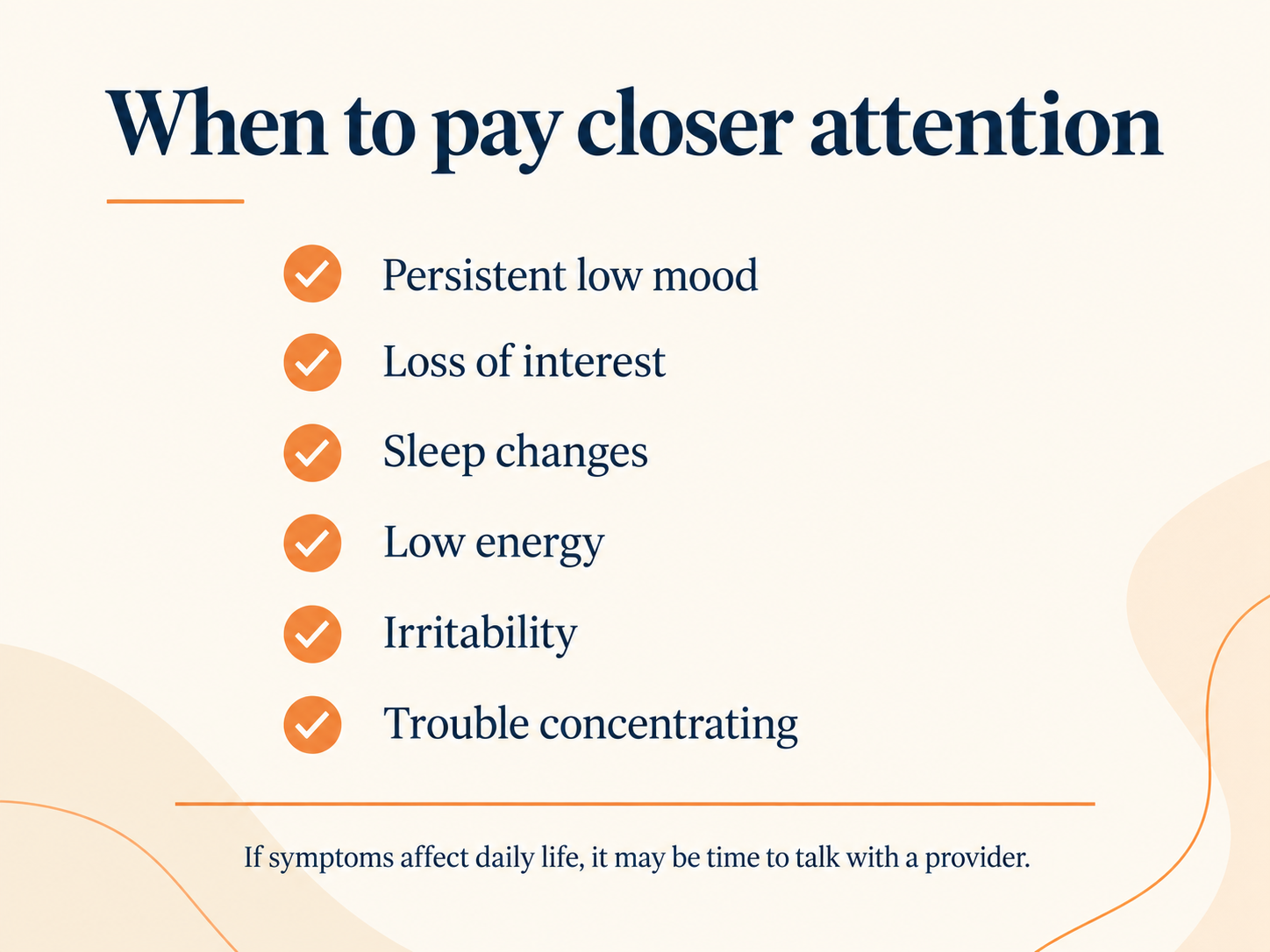
Here's something that reframes the whole question. Depression that runs strongly in families tends to be the recurrent, biologically driven kind: it comes back, it doesn't always track with life events, and it often responds only partially to medication. That pattern points to something happening in the brain's wiring, not just its chemistry.
Brain imaging consistently shows that in depression, the region behind the forehead called the dorsolateral prefrontal cortex is underactive. It regulates mood, motivation, and attention, and its connections to the rest of the mood network are weakened. Antidepressants change the chemical environment around that circuit. They don't directly retrain it, which is why someone with a strong family history can be on a high dose of a good medication and still feel fundamentally unchanged.
Transcranial magnetic stimulation (TMS) works on the circuit itself. It uses focused magnetic pulses to stimulate that underactive region directly, with no anesthesia and nothing entering your bloodstream. It doesn't care whether your depression came from genes or circumstance. It works on the network that's underperforming, wherever the underperformance came from.
Curious whether you'd qualify?
If you've tried medication and you're still not yourself, you may be a candidate for SAINT®. Our team will give you a straight answer.
What SAINT adds
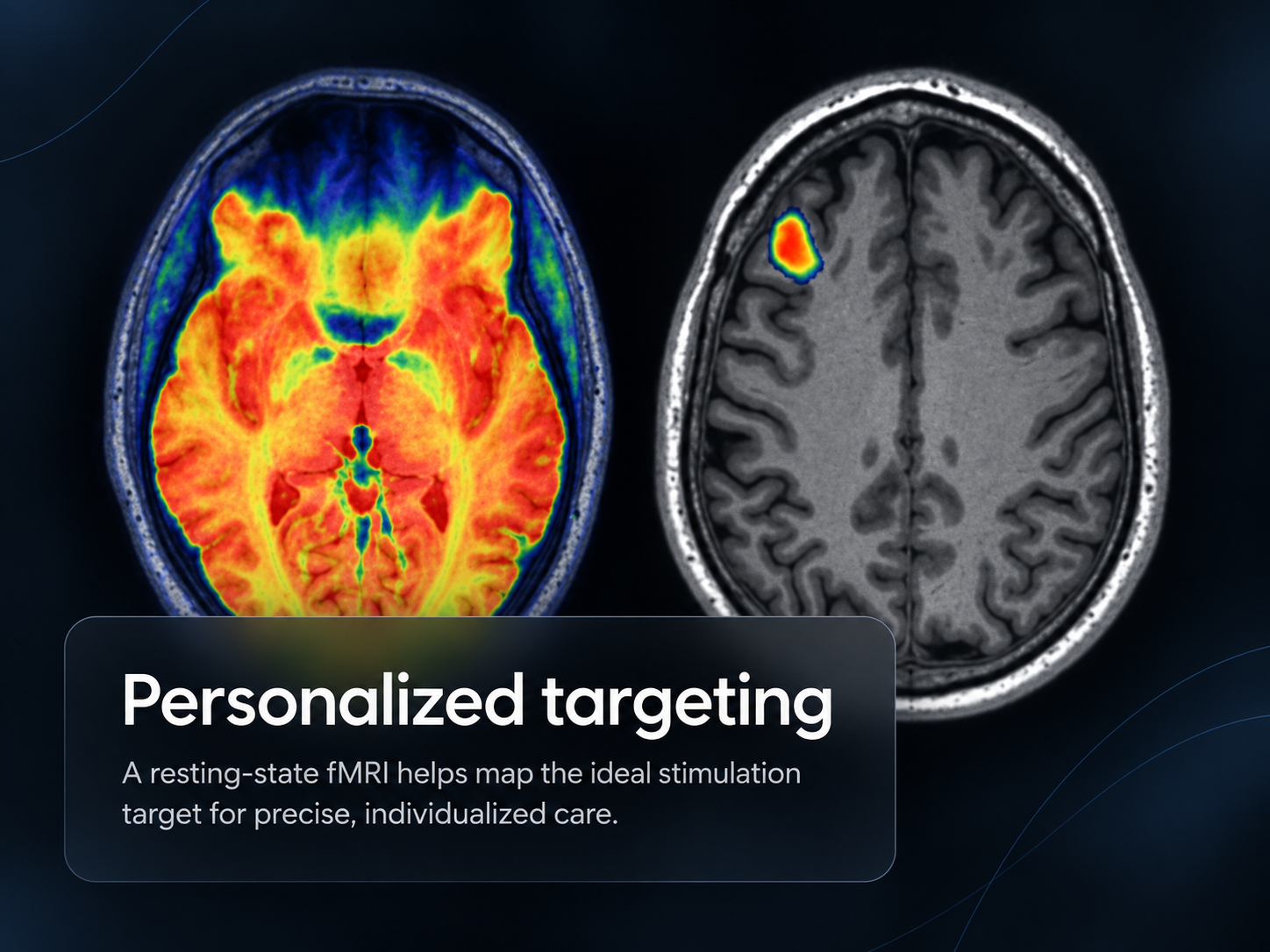
Personalized fMRI Targeting
Maps your own unique neural connectivity rather than relying on standard external head markers.
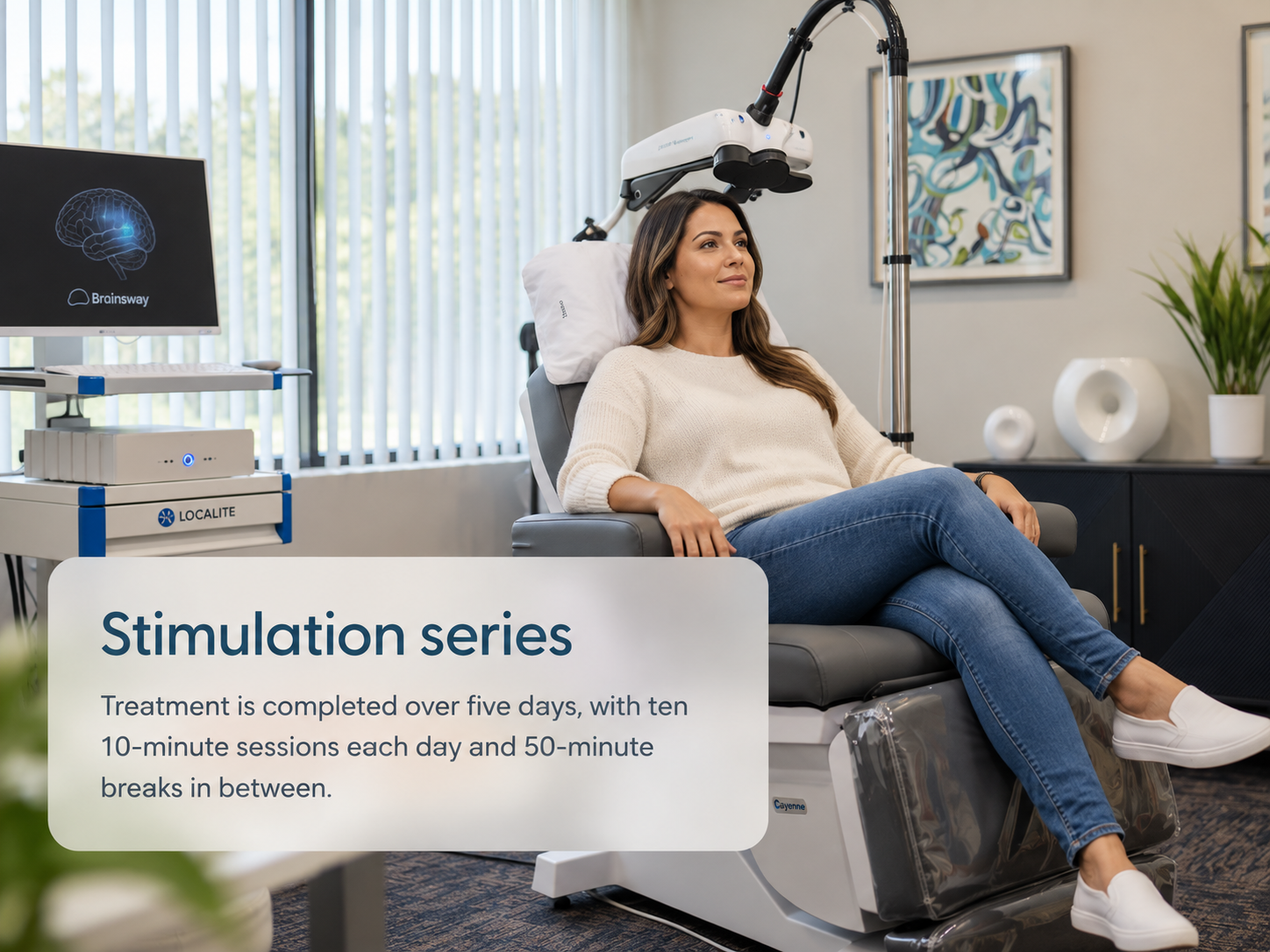
Five-Day Stimulation Series
Five clinic days, ten 10-minute sessions daily—targeted to retrain underactive mood circuits.
SAINT (Stanford Accelerated Intelligent Neuromodulation Therapy) is an accelerated, FDA-cleared form of TMS developed at Stanford's Brain Stimulation Lab. It's indicated for adults with major depressive disorder who haven't gotten adequate relief from antidepressants in their current episode, which describes a large share of people with inherited, recurrent depression.
What makes it especially relevant is that no two brains are wired the same way, even within a family. Standard TMS locates its target using external measurements of the head. SAINT uses a functional MRI (fMRI) of your own brain. Here's how it works at a Verified SAINT® Provider like Neuro Wellness TMS Centers of America:
- Consultation (Zoom web conference). You meet with our clinical team over a convenient Zoom call. As your evaluation evolves, you will also have the option to meet with our psychiatrist by Zoom web conference or in person at our clinic. You meet with our clinical team to review your symptoms, your medication history, your family history, and whether SAINT is right for you.
- fMRI brain scan (mandatory in person). A roughly 45-minute functional MRI maps how your individual brain networks are wired and where they're communicating poorly. (Mandatory in-person scan at an imaging partner center.)
- Personalized targeting. A targeting algorithm reads your scan and identifies the exact location where stimulation will most effectively reach the mood-regulation network. Neuronavigation guides the coil to that spot for every session.
- Five-day stimulation series (mandatory in person). In-person treatment Monday through Friday at our Coral Springs clinic. Ten 10-minute sessions per day, with 50-minute breaks in between, for five consecutive days. Five clinic visits, compared with 30 to 36 for conventional TMS. Most patients notice a change in mood within the first couple of days.
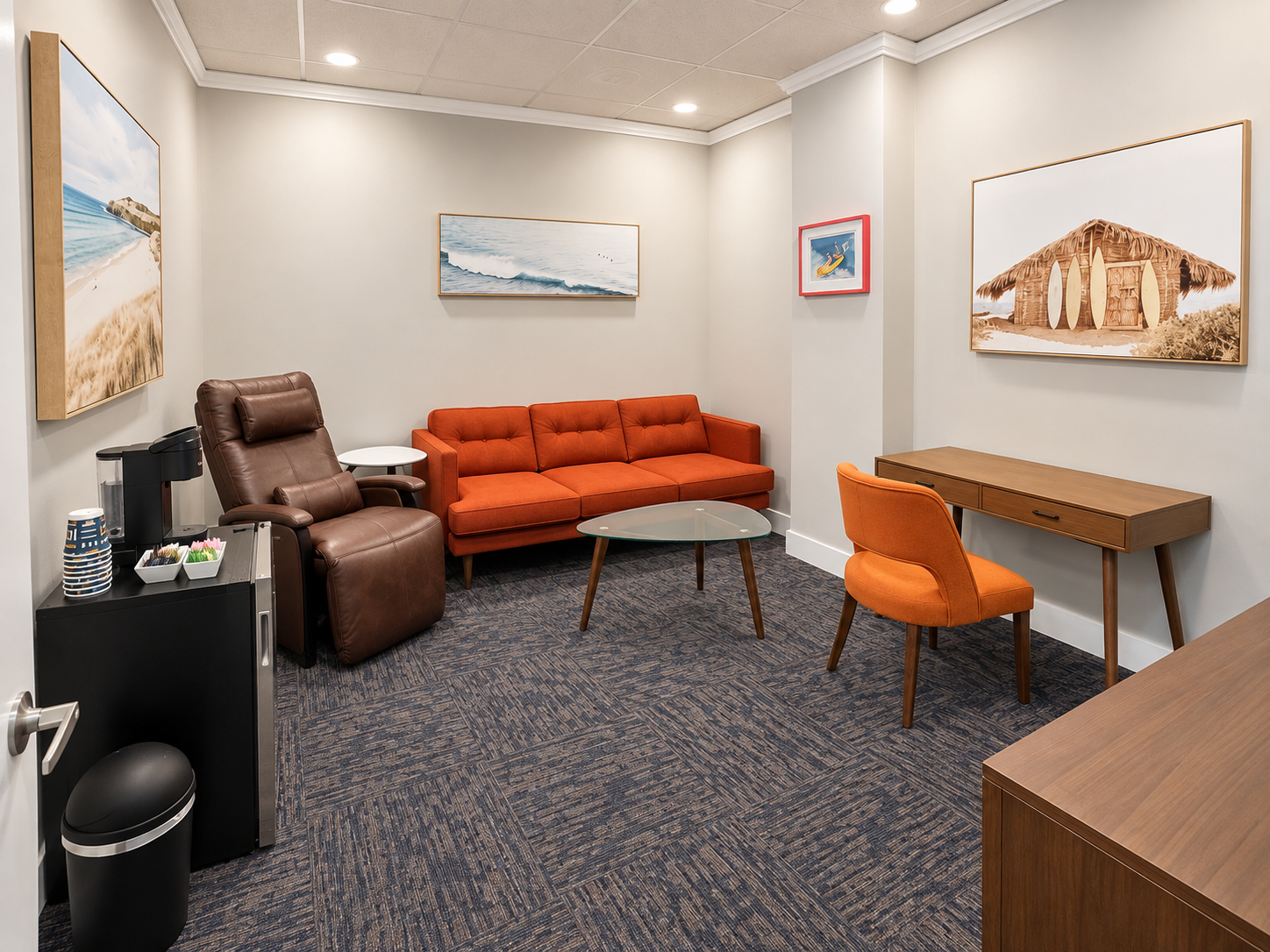
Private Suites & Dedicated SAINT® Lounge Wing
Designed as a restful outpatient retreat. Between sessions, you and your family have your own private suite with recliners, workspace, and refreshments. Our on-site care team attends to you throughout the day so you have lunch in comfort and feel completely supported at home.
What the results look like
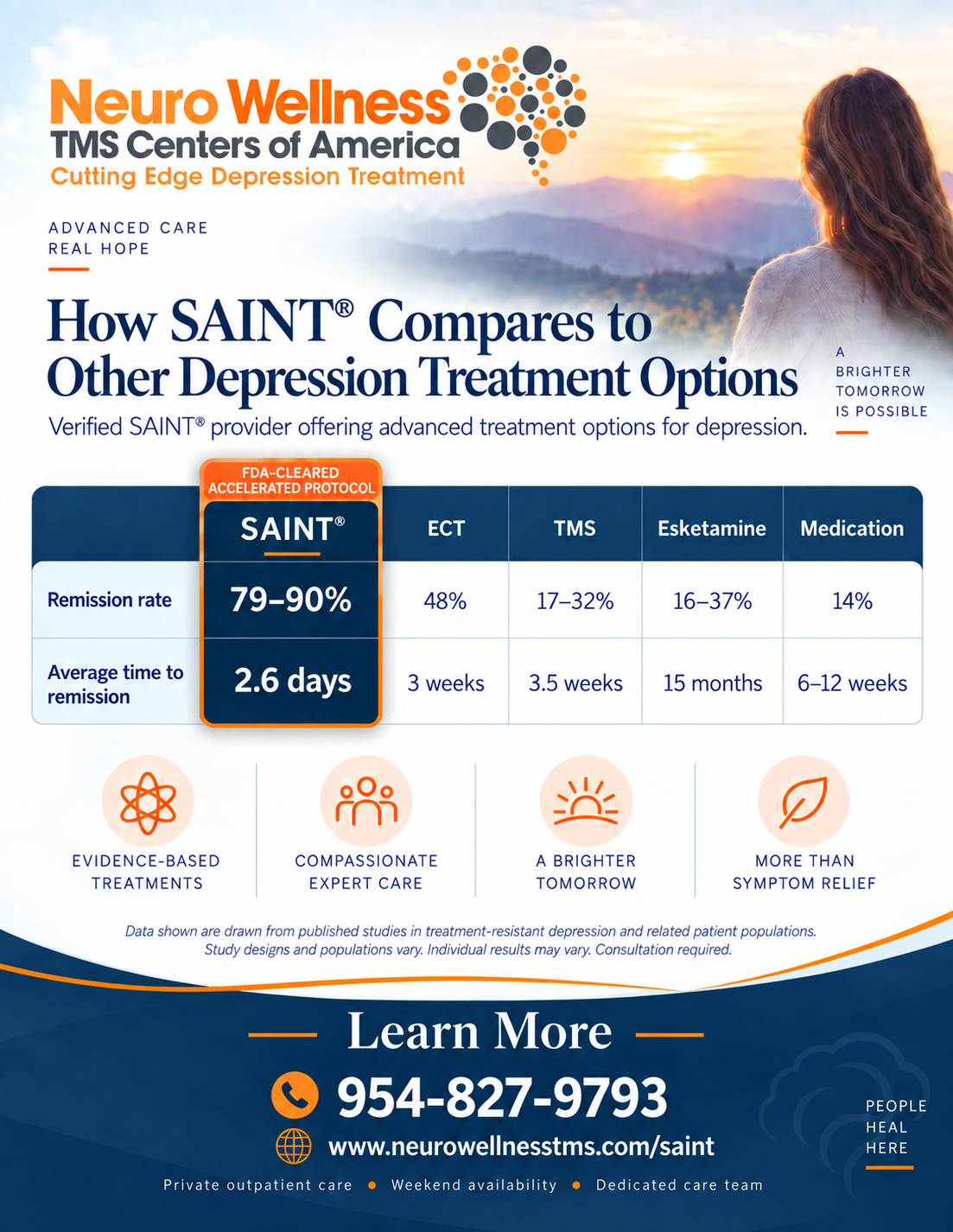
See How SAINT® Stacks Up
In the clinical trials behind SAINT's FDA clearance, participants had treatment-resistant depression and had already failed prior treatments. Seventy-nine percent reached remission, not just improvement, with an average time to remission of about two and a half days. Across more than 400 trial patients, 85 percent experienced symptom relief, with no serious adverse events.
Side effects were generally mild: headache, fatigue, and temporary scalp discomfort at the treatment site. SAINT isn't appropriate for people with non-removable metal in or near the head or an implanted device, and you'll be screened for these at your consultation.
You don't have to stop your current medications. Most patients continue their existing regimen through treatment.
A different way to think about it
If depression runs in your family, that's not a life sentence. It's a reason to take your own treatment seriously and to pursue the most effective options available, rather than settling for the ones that helped your parents get by.
You may also be the first person in your family with access to treatments that didn't exist a generation ago. A five-day, imaging-guided course of brain stimulation wasn't an option for your mother. It is for you. That's worth something.
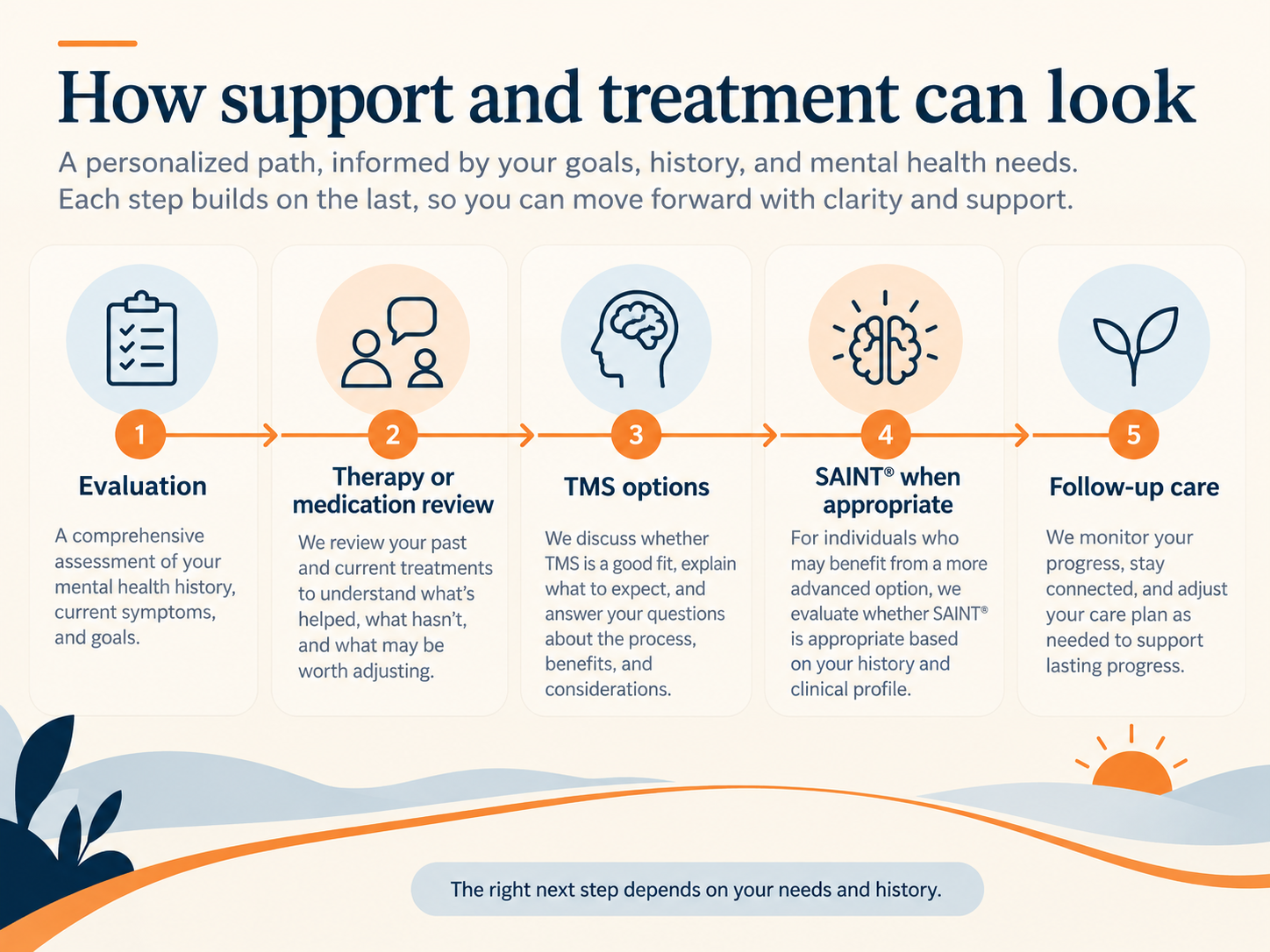
What to do next
If you've been quietly assuming that your depression is just part of your inheritance, we'd like to challenge that assumption with you.
At Neuro Wellness TMS Centers of America, the first appointment is an evaluation, not a commitment. We'll start with your history, including your family history, and end with a clear opinion about whether SAINT is a good fit. If it is, we'll walk you through the scan, the schedule, and what to expect during your treatment week. Insurance coverage for SAINT varies by plan; our team can help you understand your options, including prior authorization and self-pay.
Schedule a consultation: 954-827-9793
If you are in crisis or thinking about harming yourself, please call or text 988 (Suicide and Crisis Lifeline) or go to your nearest emergency room. This article is for educational purposes and is not a substitute for individual medical advice.
Frequently Asked Questions
Is depression genetic?
If depression runs in my family, will treatment still work for me?
Will my depression follow the same course as my parent's?
Why does inherited depression often respond only partially to medication?
How is SAINT different from standard TMS for inherited depression?
Do I have to stop my medication to do SAINT?
Explore Related Resources
You've Tried Everything. Why Is the Depression Still Here?
What treatment-resistant depression means and why medications don't work for everyone.
Depressed and Anxious at the Same Time? You're Not Confused. You're Typical.
Why depression and anxiety overlap and how targeting shared brain circuits may help.
Am I a Candidate for TMS?
What clinicians consider when evaluating TMS eligibility.
What Is SAINT TMS Therapy?
How the five-day, fMRI-guided protocol works.
Ready to talk to someone?
The hardest part is usually the first phone call. Everything after that is a series of small, defined steps.
You Don't Have to Figure This Out Alone
Schedule a Consultation